Best Inverter and Battery for Home: What to Buy in 2026


The best inverter and battery for home use in India is a pure sine wave inverter paired with a 150Ah tall tubular battery for most households. Tubular batteries handle frequent deep discharge cycles, tolerate high temperatures, and offer the lowest cost per year of use. Lithium-ion setups cost roughly 2.5 times more upfront but suit solar homes, small spaces, and buyers who want zero maintenance.
Which Inverter Battery Suits Your Home: Quick Comparison
Your Situation | Recommended Battery | Approximate Cost (Battery Only) |
|---|---|---|
Frequent power cuts, moderate budget | 150Ah tall tubular | ₹10,000 – ₹14,000 |
Long outages (6+ hours), larger home | 200Ah tall tubular | ₹14,000 – ₹20,000 |
Solar home, space constraints | Lithium-ion (LiFePO4) | ₹35,000 – ₹80,000 |
Urban flat, short cuts, UPS use | SMF (VRLA) | ₹8,000 – ₹14,000 |
Verify current prices at purchase, battery prices move with lead and lithium commodity rates.
Which Inverter Battery Is Best for Home Use?
Tubular batteries are the most practical choice for the majority of Indian homes. They use a thick tubular positive plate design that handles deep discharge efficiently. A 150Ah tubular battery can support a standard 2 BHK load, fans, LED lights, a Wi-Fi router, and a television, for roughly 3 to 5 hours depending on total wattage drawn. For homes with longer outages or refrigerators on backup, a 200Ah battery gives a more comfortable buffer.
That said, tubular batteries do require periodic maintenance. You check the electrolyte level every 30 to 45 days and top up with distilled water. Skip this for a few months and battery life drops noticeably. If that kind of upkeep feels unrealistic, an SMF or lithium option is worth paying more for.
Adwin Power manufactures tubular inverter batteries designed specifically for the voltage fluctuation and heat conditions common across northern and central India.
How to Calculate the Battery Capacity You Actually Need
Battery capacity in Ah (Ampere-hours) is not the same as backup hours. The backup you get depends on the load connected and the battery voltage (12V for most home inverters).
Formula: Ah required = (Total load in watts × Required backup hours) ÷ 12V
Example:
- 3 fans at 75W each = 225W
- 6 LED lights at 10W each = 60W
- 1 router at 20W = 20W
- Total load = 305W
For 4 hours of backup: 305 × 4 ÷ 12 = 101Ah minimum
A 150Ah battery gives you headroom for battery aging and efficiency losses. Never run a battery down to zero; stopping at 20% charge remaining extends its life considerably.
Best Inverter for Battery at Home: What to Look For
Feature | Why It Matters | What to Check |
|---|---|---|
Pure sine wave output | Modern appliances, BLDC fans, and refrigerators need it | Avoid "modified sine wave" units entirely |
VA rating | Must exceed your total load by 20–25% | For 500W load, choose 650VA minimum |
Input voltage range | Areas with low voltage need wide-input models (100–300V) | Ask your dealer for the voltage range spec |
Battery compatibility | Some inverters work only with specific chemistry | Confirm tubular/lithium mode before buying |
Charging speed | Matters when power windows are short | Check charging current spec (amps) |
A 900VA to 1100VA pure sine wave inverter covers most 2 BHK homes. For homes that include a refrigerator or AC on backup, move to 1500VA or 2000VA.
Tubular vs Lithium: The Honest Comparison
Lithium-ion batteries (particularly LiFePO4 chemistry) have genuine advantages. They last 8 to 12 years versus 5 to 8 for a maintained tubular, they charge 2 to 3 times faster, and they require no water topping. For solar setups where the battery cycles every day, lithium's higher cycle count makes a real cost difference over time.
But for a home that sees 1 to 3 hours of power cuts daily on a limited budget, tubular batteries still deliver better value. The upfront cost difference (roughly ₹12,000 for a 150Ah tubular versus ₹45,000 or more for an equivalent lithium) does not recover itself quickly enough when the power cut pattern is light.
The honest answer: neither technology is universally better. The right choice depends on how often you cycle the battery, whether you have solar panels, and how much maintenance you are willing to do.
Adwin Power's lithium inverter and battery range is worth comparing if you are planning a solar-paired setup.
Who Should Choose What: Decision Framework
Tubular battery is a strong fit if you:
- Have daily power cuts of 2 to 6 hours
- Are on a budget under ₹25,000 for battery + inverter
- Have ventilated space and are comfortable with basic upkeep
- Live in a hot climate (tubular performs better in high temperatures than some lithium variants)
Lithium battery is a strong fit if you:
- Have solar panels and want to cycle the battery daily
- Need a compact, maintenance-free setup (apartment, small room)
- Want 10+ year battery life and can absorb the upfront cost
- Run sensitive medical or work-from-home equipment that needs very fast charging
SMF battery is a marginal fit for home inverters: SMF (Sealed Maintenance-Free) batteries are designed for UPS systems with light, short discharge. Their cycle life is roughly 250 to 300 cycles, compared to 800 to 1,200 cycles for a good tubular battery. Using an SMF battery on a home inverter that sees daily deep discharges will mean replacement within 2 to 3 years instead of 5 to 7.
Not a fit: Flat plate batteries (the cheapest category) work for homes with short, infrequent cuts only. For any location with more than one hour of daily outage, the short cycle life makes them expensive in the long run.
Common Buying Mistakes to Avoid
Most people focus entirely on brand and price. The three choices that actually determine whether an inverter battery system performs well are capacity (right Ah for your load), chemistry (right type for your usage pattern), and maintenance habit. Buying a 200Ah battery for a home that only draws 150W and then never topping the water is a waste of money on both ends.
A few other things worth knowing before purchase: batteries lose roughly 20% of their capacity over the first two to three years of normal use. The advertised Ah rating is a new-battery figure. Factor in this degradation when planning your backup hours.
For a deeper look at how lead-acid battery chemistry works and what affects lifespan, Adwin's post on lead acid batteries covers the chemistry in plain language.
FAQs: Best Inverter and Battery for Home
Which inverter battery is best for home use in India?
For most Indian homes, a 150Ah tall tubular battery paired with a 900VA to 1100VA pure sine wave inverter is the most practical combination. This is consistently the best inverter battery for home setups where daily power cuts and high temperatures are the main variables. It handles daily power cuts, tolerates heat, and offers 5 to 7 years of life with basic maintenance.
Which inverter battery is best for home, tubular or flat plate?
Tubular batteries last longer and handle deeper discharges than flat plate batteries. For homes with regular or prolonged power cuts, tubular batteries deliver significantly better long-term value despite costing more upfront.
What capacity inverter battery do I need for a 3 BHK home?
A 3 BHK home running fans, lights, and a TV typically draws 400 to 600W. A 150Ah battery gives about 3 to 4 hours of backup at 400W load. For 5 to 6 hours, a 200Ah battery is a better fit.
Is a lithium battery better than tubular for home use?
Lithium batteries charge faster, last longer, and need no maintenance. But they cost 3 to 4 times more than tubular. For homes without solar panels and with moderate power cuts, tubular batteries still provide better value per rupee.
How long does an inverter battery last?
A tubular battery with regular maintenance lasts 5 to 7 years. Lithium-ion batteries last 8 to 12 years. Flat plate batteries typically last 3 to 4 years.
What is pure sine wave and why does it matter?
Pure sine wave inverters produce clean AC power matching the grid. Appliances like BLDC fans, inverter refrigerators, and computers require this. Modified sine wave inverters are cheaper but can cause motor heating, buzzing, and shorter appliance life.
How much does a good inverter and battery for home cost in India?
A reliable tubular battery and inverter combination typically costs ₹18,000 to ₹30,000 depending on capacity and brand. Lithium all-in-one units start around ₹30,000 and go up to ₹80,000 or more for higher capacities.
Can I add solar panels to my existing home inverter?
Many modern inverters are solar-compatible or can be replaced with a Solar PCU (Power Conditioning Unit) that charges the battery from both the grid and solar panels. Check whether your existing inverter has a solar input port first.
Featured Videos
Watch insightful guides and product highlights

Adwin Power Partnership Experience

25 Years of Power: What Makes Adwin Two-Wheeler Batteries Reliable

Real experiences. Real words. Real relationships.

What Makes Adwin Power Partnerships Last? | A Partner’s Real Experience
Adwin Power Partnership Experience | Real Story, Real Trust, Real Growth

Reduce Generator Dependency with Lithium Battery Energy Storage | Adwin Power
Connect with us and get a reliable power source for your home with Adwin.

Choose Adwin and Be Bright!
Long Backup Batteries | Adwin Batteries

Build a greener tomorrow by choosing solar power

Say goodbye to interruptions and embrace uninterrupted memories!

Let your lives be uninterrupted with Adwin!

Adwin Car Battery | Best Automotive battery for cars | #adwin #battery #shorts #carbattery #carshort

Adwin Inverter batteries! Order Now and know the difference! #shorts

Trust the backup of Adwin #inverterbatteries to keep your home bright #Adwin #adwinbatteries

Employee Engagement at ADWIN Batteries | Life at ADWIN

बढ़ते बिजली बिल से परेशान? Solar Panel से करें Bill कम | Adwin Power Solar Solution

Adwin Power Meet 2026
Tired of sudden power cuts disrupting your daily life?

Welcome to ADWIN | Employee Induction Program Highlights

Ever wondered what goes behind the making of a reliable battery?

Big Match Tonight? Zero Power Cuts Allowed! ⚽🔋 | Adwin Bheem Inverter Battery

Safety Engineering Training Program at ADWIN
Adwin Solar Batteries | Top-notch solar batteries for maximizing savings

Adwin Inverter Battery | Best Inverter Battery #battery #inverterbattery #Shorts #india

Adwin inverter batteries | Best battery for long lasting performance | Adwin Customer Testimonial
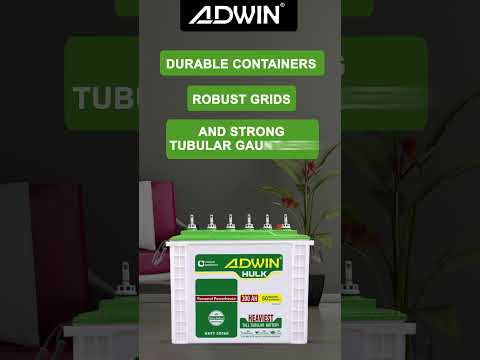
Adwin Batteries: Powering Through Power Cuts, Uninterrupted Life Every Day!

Tap into the sun’s power, boost your savings, & enjoy uninterrupted workflow with Solar Battery.

Adwin Battery at EV EXPO, New Delhi



.jpeg)
.jpeg)


.jpeg)


.jpeg)


