World Cup 2026 and the Power Problem Adwin Was Built to Solve


The 2026 FIFA World Cup runs from 11 June to 19 July across the United States, Canada and Mexico, and the single thing every fan needs to watch all 104 matches is the one thing millions of homes in Adwin's markets cannot count on: uninterrupted power. Adwin does not sponsor the tournament and its batteries are not sold in the three host countries. What Adwin does is sell the inverter batteries, solar storage and lithium backup that keep a television, a fan and a router running through a kickoff in Lagos, Cairo or Kathmandu when the grid drops out. That is the honest connection, and this guide is built on it.
Below you get the verified brand record, a plain explanation of the battery technology Adwin actually makes, the real World Cup facts (including the one most fan pages get wrong), a market-by-market look at why backup power matters in Nigeria, Egypt and Nepal, and a step-by-step guide to sizing a system for the tournament. Numbers are current as of 24 June 2026. Anything that moves fast, like street prices and grid figures, is flagged "verify at publish."
At a glance
Item | Detail |
|---|---|
Tournament dates | 11 June to 19 July 2026 |
Hosts | USA, Canada, Mexico |
African teams qualified | 10 (record) |
Nigeria qualified? | No, lost play-off to DR Congo |
Egypt qualified? | Yes, Group G |
Adwin maker | Unique Energos Pvt. Ltd., Yamuna Nagar |
Adwin certifications | ISO 9001:2015, ISO 14001:2015 |
Units delivered | 3.5 million+, 14+ Indian states plus exports |
Core products | Tall tubular, solar, lithium, automotive, e-rickshaw batteries, solar PCU, panels |
Why we trust Adwin
Adwin is the battery and power brand of Unique Energos Pvt. Ltd., part of the Unique Group, a Yamuna Nagar business with older interests in plywood, panels, fertiliser and cement. The power arm is not a trading badge stuck on imported cells. The company set up a greenfield manufacturing plant spread across 32.5 acres in Yamuna Nagar, Haryana, commissioned in December 2010, and it runs its own chemical and electrical testing laboratories on site.
Two certifications matter for anyone buying a battery they expect to last years. Adwin holds ISO 9001:2015 (quality management) and ISO 14001:2015 (environmental management). The first means there is a documented, audited process behind how each battery is built and checked. The second means the manufacturing is run against an environmental standard, which is not a small thing for a lead-acid plant where recycling and emissions handling decide whether a factory is a good neighbour or a liability.
On scale, Adwin states it has delivered more than 3.5 million units across 14 or more Indian states plus international markets including Nepal, the UAE and Nigeria, with expansion underway into Africa and the Middle East, naming Egypt and Uganda. Treat the unit figure as a company claim rather than an audited number, so verify at publish if you are quoting it in a tender or a press piece. The export footprint itself is consistent with the brand's own market pages and third-party listings.
The brand line is "Life Bhi Plus. Power Bhi Plus," and the product spread covers lead-acid inverter and solar batteries, lithium batteries, automotive batteries, e-rickshaw batteries, solar power conditioning units and solar panels. That range is the reason a single brand can answer a home backup question, a solar question and an electric-rickshaw question, which most single-product competitors cannot.
Here is the honest counterweight. Adwin is not a household name on the scale of the largest Indian battery brands, and independent long-term reviews are thin online. If you are comparing it against a top-five national brand, you are weighing a strong manufacturing and certification record against a smaller public review trail. The practical answer is to buy through an authorised dealer, confirm the warranty terms in writing, and check the manufacturing date stamp on the battery before you pay.
The core technology: tall tubular, solar and lithium batteries explained
A backup system has three parts: the battery that stores energy, the inverter or power conditioning unit that converts it to usable AC, and, if you go solar, the panels and a charge controller. Adwin makes batteries across the first part and sells the rest of the chain. The battery is where most of the money and most of the failures sit, so start there.
Tall tubular batteries
A tubular battery holds its positive active material inside woven tubes rather than pasting it onto a flat plate. That construction resists the shedding and corrosion that kills flat-plate batteries early, which is why tubular is the default choice for inverter backup in homes that face long, frequent outages. "Tall" tubular simply means a taller container with more electrolyte above the plates, which stretches the gap between water top-ups and helps the battery survive heat.
Adwin's tubular line includes the Yodha YTT 21018 and YTT 15018, the Turbo UTT 1636 and the Thar UTT 16300. The model numbers encode capacity and design; an authorised dealer can map a given model to its exact amp-hour rating, which you should confirm before buying because backup time depends on it directly.
Solar batteries
A solar battery is built to be charged from panels and to handle the daily deep cycling that solar use demands. Adwin's solar range is the UEST series, listed in 20, 40, 80 and 200 Ah-class variants, designed for tall tubular solar use with features the brand describes as strong grid design, corrosion resistance and low maintenance with minimum water topping. The 200 Ah tall tubular solar battery is the one most commonly listed for whole-home solar backup.
Lithium batteries
Lithium (typically lithium iron phosphate in this category) trades a higher upfront price for longer cycle life, lighter weight, faster charging and no water maintenance. For a fan who watches a match most evenings across a 39-day tournament and well beyond, the cycle-life advantage is the real argument. Adwin lists lithium among its battery types, positioning it for EV, home and industrial use under the same "Life Bhi Plus" line.
Where each one wins
Use case | Best fit | Why |
|---|---|---|
Long daily outages, tight budget | Tall tubular lead-acid | Lowest upfront cost, proven for deep backup |
Daily solar charge and discharge | Solar tubular (UEST) | Built for deep cycling from panels |
Long life, low maintenance, space-limited | Lithium (LFP) | More cycles, no watering, lighter, faster charge |
Vehicle starting | Automotive | High cranking current, not deep-cycle |
E-rickshaw traction | Built for repeated deep discharge under load |
The trade-off competitors gloss over: lithium's sticker price is roughly two to three times a comparable lead-acid battery, so it only pays back if you cycle it often and keep it for years. For a household with rare outages, a tubular battery is the rational buy. For one cycling every single day, lithium's longer life can win on cost per cycle. Run your own numbers; the section below shows how.
The real World Cup 2026 facts, including the one fan pages get wrong
The 2026 FIFA World Cup is the first 48-team edition and the first hosted by three countries: the United States, Canada and Mexico. It runs 11 June to 19 July 2026 across 16 cities, with 104 matches, up from 64 in Qatar 2022. The final is at MetLife Stadium in East Rutherford, New Jersey, on 19 July. Argentina enter as defending champions.
Africa sent a record 10 teams: Morocco, Tunisia, Egypt, Algeria, Ghana, Cape Verde, South Africa, Senegal, Côte d'Ivoire and DR Congo. The expansion lifted Africa's allocation from five slots to nine direct places plus one via the intercontinental play-off, which DR Congo won by beating Jamaica 1-0 after extra time, returning to the finals for the first time since 1974.
Here is the fact most casual coverage gets wrong, and it matters directly to one of Adwin's biggest export markets. Nigeria did not qualify for the 2026 World Cup. The Super Eagles finished second in CAF Group C behind South Africa, reached the African play-off, and lost the decisive penalty shootout 4-3 to DR Congo in November 2025. It was the first time Nigeria failed to qualify for two consecutive World Cups since before 1994. So a Lagos household buying backup power to watch the tournament is following other teams, not its own, which is the honest framing rather than pretending the Super Eagles are in.
Egypt, by contrast, did qualify. Mohamed Salah's side topped CAF Group A and were drawn into Group G alongside Belgium, Iran and New Zealand. That gives Adwin's Egyptian expansion a genuine, factual tie to the tournament that needs no exaggeration.
International markets deep dive
Three Adwin markets, three different versions of the same problem: power you cannot fully trust. The product answer is similar; the reason behind it is not.
Best inverter battery in Nigeria: backup against a grid that keeps collapsing
Nigeria is the clearest case for backup power anywhere in Adwin's footprint. The national grid has collapsed more than 100 times since 2015. The picture improved in 2025 with only two major collapses recorded, but it slid again with a near-total collapse on 29 December 2025, when nationwide distribution fell to about 50 MW, and further disturbances into January 2026. Outages are estimated to cost the economy around 1 billion dollars a year, and Nigerians run a parallel "generator economy" estimated at nearly 14 GW of diesel and petrol capacity. Between 2024 and 2025, more than 60 percent of manufacturers secured permits to operate off-grid.
For a household, that reality makes an inverter-and-battery system close to essential rather than a luxury, and it favours deep-cycle tall tubular batteries that can ride out long outages and recharge in the short windows when supply returns. The market opportunity for Adwin is large and price-sensitive: buyers want long backup at a defensible price and a battery that tolerates heat and irregular charging. That is exactly the tall tubular brief. Note again that Nigeria is not in the World Cup, so the marketing here should sell reliability for watching the tournament, not a national-team story that does not exist.
Egypt: a strong grid, so the pitch is solar economics, not blackout fear
Egypt is the opposite of Nigeria and Adwin's messaging has to change accordingly. Egypt has built what is widely regarded as Africa's most advanced national grid, with near-universal access for its roughly 118 million people and total generation capacity above 59,000 MW after investing more than 31 billion dollars in upgrades since 2015. Selling blackout fear in Egypt would be dishonest and would not land.
The real Egyptian opportunity is solar. The country has abundant sun, rising electricity tariffs as subsidies are reformed, and a national push toward renewables. There a solar battery plus panels is an economic decision about cutting a power bill and storing daytime solar for evening use, not an emergency purchase. Adwin's UEST solar range and solar PCUs fit that brief, and Egypt is a stated expansion market, with a real World Cup connection through Salah's qualified squad. The pitch is payback period, not panic.
Nepal: load-shedding came back, and the dry season is the danger window
Nepal's story is the most misread of the three. The country officially ended load-shedding in April 2022 and generates the vast majority of its electricity from hydropower. But hydropower is seasonal, and the dry season exposes the gap. In 2025 and into 2026 load-shedding returned: industrial cuts through 2025, and by January 2026 residential cuts during morning and evening peaks were back after what locals call the 18-hour era. Peak demand reaches around 2,077 MW against constrained dry-season supply, and Nepal leans on Indian imports that are not always available at the price or hours it needs.
That makes Nepal a seasonal backup market and a growing solar-plus-storage market. The government has lifted its old cap on solar in the energy mix and awarded large solar projects with battery storage. For households, a solar battery or a tubular inverter battery covers the dry-season evening peaks when hydropower falls short. Adwin already lists Nepal as a market, so the product fit is there; the messaging should be honest that this is seasonal and peak-hour protection, not year-round blackout.
Market | Core problem | Adwin product fit | Honest caveat |
|---|---|---|---|
Nigeria | Frequent grid collapse, costly outages | Tall tubular lead-acid for deep backup | Not a World Cup team; sell reliability, not national pride |
Egypt | Reliable grid, rising tariffs, strong sun | UEST solar batteries plus solar PCU | Sell solar payback, not blackout fear |
Nepal | Seasonal dry-season load-shedding | Solar or tubular battery for peak hours | Power is mostly reliable in wet season |
How to set up World Cup 2026 power backup with Adwin products
The goal is simple: keep your viewing setup running through any outage during a match. Here is the practical process, with the math competitors skip.
Step 1: Add up what you actually need to run
A typical match-night load is modest. A 100 W LED television, a 70 W ceiling fan, a 15 W router and a few 10 W LED bulbs come to roughly 215 W. Round up to 250 W to allow for a set-top box or a phone charger.
Step 2: Decide how many hours of backup you want
Backup hours depend on battery capacity and your load. The usable energy from a 12 V battery is roughly: capacity in Ah multiplied by 12, multiplied by a usable fraction (about 0.5 for lead-acid to protect battery life, up to about 0.8 for lithium), divided by your load in watts.
Battery | Nominal energy | Usable (approx.) | Backup at 250 W load |
|---|---|---|---|
150 Ah tubular (lead-acid) | 1,800 Wh | ~900 Wh (50%) | ~3.6 hours |
200 Ah tubular (lead-acid) | 2,400 Wh | ~1,200 Wh (50%) | ~4.8 hours |
100 Ah lithium (LFP) | 1,200 Wh | ~960 Wh (80%) | ~3.8 hours |
A single 200 Ah tubular battery comfortably covers a full match plus halftime and extra time at a typical viewing load. Two matches back to back, or a heavier load with a fridge, push you toward a larger bank or lithium.
Step 3: Match the battery to the inverter and charging source
For grid-charged backup, pair a tubular battery with a standard home inverter sized above your peak load. For solar, use a solar battery from the UEST range with panels and a charge controller or a solar PCU that handles both. In a high-outage market like Nigeria, size the inverter with headroom so it is not running at its limit during the match.
Step 4: Do the cost-per-cycle math before you choose chemistry
This is the calculation that decides lead-acid versus lithium. Take the price, divide by the rated cycle life, and you get cost per cycle. A lead-acid tubular battery might cost less upfront but deliver fewer cycles; a lithium battery costs more but lasts far longer. If you cycle daily, lithium's cost per cycle can fall below lead-acid over its life. If you cycle rarely, lead-acid wins on total cost. Get the current price and the rated cycle life for the specific Adwin model from an authorised dealer and run this for your own usage. Prices vary by dealer and date, so verify at publish.
Step 5: Buy verified, check the date stamp, confirm the warranty
Buy through an authorised Adwin dealer or a verified marketplace listing, check the manufacturing date stamped on the battery so you are not getting old stock, and get the warranty terms in writing. For solar, confirm the panel wattage and the controller rating match the battery you are buying.
Frequently asked questions
Is Adwin a good inverter battery brand?
Adwin is made by Unique Energos Pvt. Ltd. in Yamuna Nagar, Haryana, in an ISO 9001:2015 and ISO 14001:2015 certified plant commissioned in 2010, with on-site testing labs. It has a strong manufacturing and certification record. Independent long-term reviews online are limited, so buy through an authorised dealer and confirm warranty terms.
What is a tall tubular battery for home use?
A tall tubular battery stores its positive active material in woven tubes inside a taller container with extra electrolyte. This design resists corrosion and shedding, survives heat better, and needs less frequent water top-up, which makes it the standard choice for home inverter backup in areas with long or frequent outages.
Which is the best inverter battery in Nigeria for power cuts?
For Nigeria's frequent and often long outages, a deep-cycle tall tubular lead-acid battery is usually the rational choice because it offers long backup at a defensible price and tolerates heat and irregular charging. Confirm the amp-hour rating with a dealer and size it to your specific load and desired backup hours.
Is a solar battery for inverter worth it in Egypt?
In Egypt the grid is reliable, so a solar battery is an economic decision rather than an emergency one. With strong sunshine and rising tariffs as subsidies reform, storing daytime solar for evening use can cut bills. The question is payback period, which depends on your tariff, sun hours and system cost.
Should I buy a lithium battery backup or lead-acid?
Lithium costs roughly two to three times more upfront but delivers many more cycles, no water maintenance, lighter weight and faster charging. If you cycle daily over years, lithium can win on cost per cycle. If outages are rare, lead-acid tubular is cheaper overall. Calculate price divided by rated cycle life for both.
Does Adwin sell in the World Cup 2026 host countries?
No. The 2026 World Cup is hosted in the United States, Canada and Mexico, and there is no evidence Adwin sells in those markets. Adwin's markets are India, Nepal, the UAE and Nigeria, with expansion into Egypt and Uganda. The relevance is keeping your viewing setup powered in those markets during the tournament.
Did Nigeria qualify for the 2026 World Cup?
No. Nigeria finished second in CAF Group C, reached the African play-off, and lost a penalty shootout 4-3 to DR Congo in November 2025. It was Nigeria's first back-to-back failure to qualify since before 1994. Egypt did qualify and is in Group G.
What size Adwin battery do I need to watch a full match during an outage?
A typical viewing load of a TV, fan, router and a few lights is around 215 to 250 W. A 200 Ah tall tubular battery delivers roughly 4 to 5 hours of usable backup at that load, enough for a full match including halftime and extra time. Heavier loads or back-to-back matches need a larger bank or lithium.
Featured Videos
Watch insightful guides and product highlights

Adwin Power Partnership Experience
25 Years of Power: What Makes Adwin Two-Wheeler Batteries Reliable

Real experiences. Real words. Real relationships.
What Makes Adwin Power Partnerships Last? | A Partner’s Real Experience
Adwin Power Partnership Experience | Real Story, Real Trust, Real Growth

Reduce Generator Dependency with Lithium Battery Energy Storage | Adwin Power
Connect with us and get a reliable power source for your home with Adwin.

Choose Adwin and Be Bright!
Long Backup Batteries | Adwin Batteries
Build a greener tomorrow by choosing solar power

Say goodbye to interruptions and embrace uninterrupted memories!

Let your lives be uninterrupted with Adwin!
Adwin Car Battery | Best Automotive battery for cars | #adwin #battery #shorts #carbattery #carshort

Adwin Inverter batteries! Order Now and know the difference! #shorts
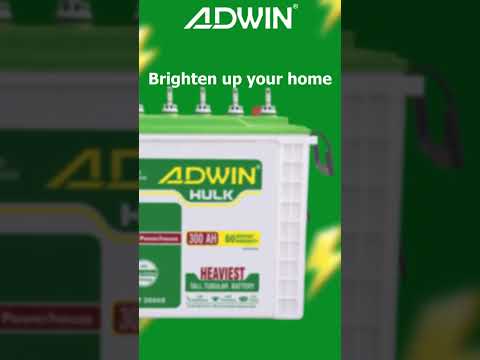
Trust the backup of Adwin #inverterbatteries to keep your home bright #Adwin #adwinbatteries
Employee Engagement at ADWIN Batteries | Life at ADWIN
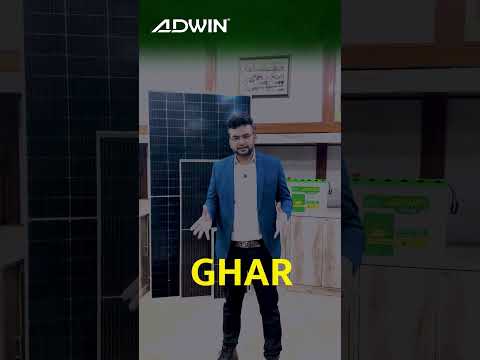
बढ़ते बिजली बिल से परेशान? Solar Panel से करें Bill कम | Adwin Power Solar Solution

Adwin Power Meet 2026
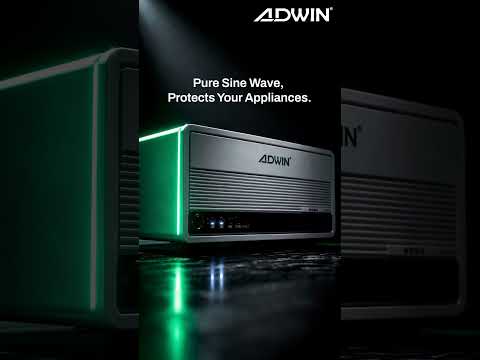
Tired of sudden power cuts disrupting your daily life?

Welcome to ADWIN | Employee Induction Program Highlights
Ever wondered what goes behind the making of a reliable battery?

Big Match Tonight? Zero Power Cuts Allowed! ⚽🔋 | Adwin Bheem Inverter Battery

Safety Engineering Training Program at ADWIN
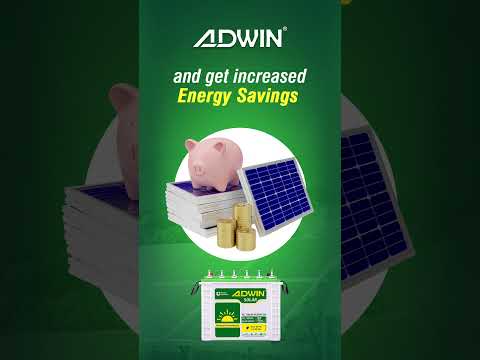
Adwin Solar Batteries | Top-notch solar batteries for maximizing savings
Adwin Inverter Battery | Best Inverter Battery #battery #inverterbattery #Shorts #india
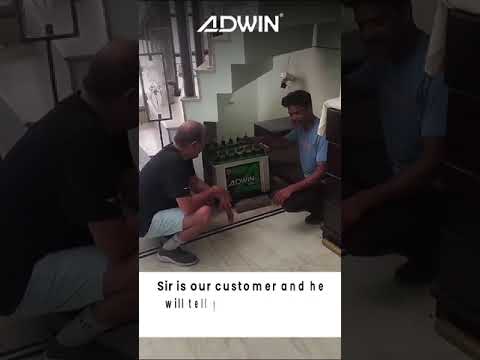
Adwin inverter batteries | Best battery for long lasting performance | Adwin Customer Testimonial
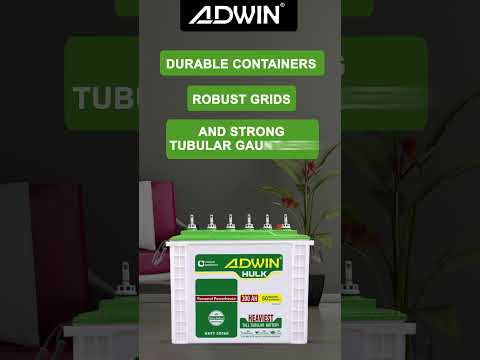
Adwin Batteries: Powering Through Power Cuts, Uninterrupted Life Every Day!

Tap into the sun’s power, boost your savings, & enjoy uninterrupted workflow with Solar Battery.
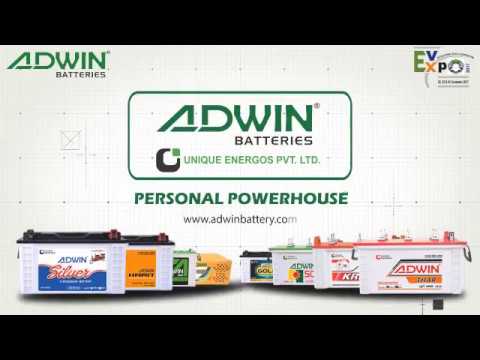
Adwin Battery at EV EXPO, New Delhi


.jpeg)
.jpeg)


.jpeg)


.jpeg)


