How Long Does a Car Battery Last? 7 Proven Tips to Extend Battery Life

A car battery lasts 3 to 5 years on average. Most standard flooded lead-acid batteries fail somewhere in that window, AGM batteries run 4 to 7 years, and lithium-ion units in hybrids and EVs last far longer. Heat, short trips, and deep discharges shorten that life. The "3 to 5 years" figure is counted from manufacture, not from the day it went into your car.
The number most pages quote, 3 to 5 years, is correct but incomplete. The detail almost every commercial battery page leaves out is the start date: a battery can sit on a shelf for months before it reaches your hood, and that aging counts. Interstate Batteries' own lab manager has said a battery can effectively be "dead before it's installed" if it sat too long at low charge. So the real question is not just how many years a battery lasts, but how many years you will get from the one in front of you, given where you live and how you drive.
Car battery lifespan at a glance
Battery type | Typical lifespan | Where you'll find it | Notes |
|---|---|---|---|
Standard flooded lead-acid (SLI) | 3 to 5 years | Most older and budget vehicles | Cheapest; least tolerant of deep discharge |
EFB (enhanced flooded) | 4 to 6 years | Entry-level start-stop cars | Accepts charge better than standard flooded |
AGM (absorbent glass mat) | 4 to 7 years | Start-stop systems, high-accessory cars | Handles deep discharge and vibration better |
Lithium-ion (12V or traction) | 8 to 20 years | Hybrids and EVs | Long calendar life; higher cost |
How long does a car battery last on average?
A standard car battery lasts 3 to 5 years under normal conditions. AAA, AutoZone, Batteries Plus, and Nationwide all land on this same range, and battery problems are one of the top causes of roadside breakdown calls. The figure is an average across climates and driving styles, not a guarantee, which is why the same battery model can quit at year two for one driver and run past year six for another.
Three forces drive that variation: time, heat, and vibration. AAA names these as the three biggest factors in battery aging. Time is unavoidable. Heat and vibration you can partly control, which is where the tips later in this guide come in.
How long should a car battery last by type?
How long a car battery should last depends mostly on its chemistry. A standard flooded battery should give you 3 to 5 years. An AGM battery should reach 4 to 7. A lithium-ion pack in a hybrid or EV should outlast most of the rest of the car. If a standard battery dies before three years and you did not leave it fully discharged or bake it in extreme heat, that is early failure, and a warranty claim is worth checking.
Car batteries sit in the lead-acid family, the same chemistry used across most lead-acid inverter and battery ranges, so the aging rules here (sulfation from undercharging, damage from deep discharge) apply broadly across lead-acid types, not just to car starters.
Question | Honest answer |
|---|---|
Should a new battery last 5 years? | Often, but only with moderate climate and regular driving. Hot southern states push you toward 3. |
Does a longer warranty mean more years? | No. A 72-month warranty is not 6 years of free replacement. Most warranties drop into a prorated period early, so a failure in year four usually means partial payment. |
Is a pricier battery always longer-lived? | Not automatically. Fresh stock and the right type matter more than price alone. |
How long can a car battery last with good care?
A car battery can last up to 10 years in the best case, though most never get there. Interstate Batteries reports hearing about 10-year batteries "quite often," and HowStuffWorks confirms a decade is possible for a well-treated battery. A 10-year battery is one that never took permanent damage: it was never cooked by sustained heat and never left sitting deeply discharged.
The catch is that you cannot tell from the outside how close a battery is to the edge. Many fail with no warning at all. That is why testing matters more than counting birthdays, covered below.
What shortens a car battery's life
Most batteries that die early were not defective. They were worn out faster than they had to be. The main culprits:
Factor | What it does | Realistic impact |
|---|---|---|
Sustained heat | Speeds the chemical reaction and accelerates internal degradation | A battery that lasts 5 years in cool northern states often lasts only ~3 in hot southern ones |
Short trips (under 15 min) | Alternator never fully recharges; plates sulfate | Chronic undercharging steadily cuts capacity |
Deep discharge | One full drain (lights left on overnight) damages lead-acid plates | A single deep discharge takes a permanent chunk out of life |
Vibration | Loosens internal components, promotes corrosion | Worse with a loose hold-down or rough roads |
Parasitic draw | A stuck light or faulty relay drains a parked car | Can flatten a healthy battery overnight |
Charging system fault | Over- or under-charging from a bad alternator | Persistent miswiring ages the battery quickly |
The honest counterpoint many readers expect to hear: cold gets the blame, but heat does more long-term damage. Cold mornings reveal a weak battery because chemical reactions slow down, but it is summer heat that quietly destroys capacity over the year.
7 proven tips to extend battery life
These are the steps that move the needle. Most take minutes.
- Drive at least 20 to 30 minutes at highway speed once a week. This lets the alternator fully top off the charge and prevents the sulfation that short trips cause.
- Park in shade or a garage. Heat is the single biggest long-term killer. Keeping the battery cooler buys you months to years.
- Use a battery maintainer if the car sits. For any vehicle parked more than two weeks (classic car, RV, second vehicle), a trickle charger or maintainer prevents self-discharge from flattening the battery.
- Clean the terminals. Corrosion adds resistance and makes both the battery and alternator work harder. A baking-soda-and-water paste removes light buildup; rinse and dry afterward. Sealed maintenance-free designs, like an SMF battery, remove the fluid-topping chore but still build terminal corrosion, so this step stays on the list.
- Check the hold-down hardware. A battery that can shift will fail early from vibration. Make sure the clamp is tight.
- Test it once a year after year three. A technician can test starting and charging in under a minute. Tie it to an oil change so you do not forget.
- Never leave accessories running on a dead engine. Lights, audio, and phone charging on a parked car all draw down a battery that the alternator is not replacing.
How long a car battery will last: who gets 3 years vs 5+
How long a car battery will last comes down to climate, trip length, and care. Use this to place yourself honestly.
Likely 5+ years (strong fit): cool or temperate climate, garage parking, regular drives of 30+ minutes, annual testing, and a battery bought fresh. These owners often beat the average.
Likely 3 to 4 years (marginal): mixed climate, mostly short commutes, occasional long sits, and a battery whose purchase date is unknown. This is the typical driver.
Likely under 3 years (at-risk): hot southern climate, frequent short trips, accessory-heavy use, no maintainer during long parking, and a battery that may have sat on a shelf before install. Replace proactively here rather than waiting to be stranded.
When does replacing early make sense? If your battery is past three years, lives in a hot climate, and you depend on the car daily, the cost of a planned replacement is lower than a tow plus a missed appointment. When does waiting make sense? A two-year-old battery in a temperate climate that tests healthy does not need replacing on a calendar alone.
FAQs
How long does a car battery last on average? Three to five years for a standard flooded battery. AGM batteries last 4 to 7 years, and lithium-ion units in hybrids and EVs last far longer. Climate, trip length, and care all shift the number.
How long should a car battery last before it needs replacing? A standard battery should last 3 to 5 years and an AGM 4 to 7. If a standard battery fails before three years without abuse, that is early failure and worth a warranty check. Start testing annually after year three.
How long can a car battery last at the absolute maximum? Up to about 10 years for a well-treated battery, though most do not reach it. A decade-long battery is one that was never deeply discharged and never exposed to sustained extreme heat.
How long does car battery last in hot weather?
Often closer to three years in consistently hot climates. Heat speeds internal degradation, so a battery that would last five years up north can last only three in the South. Shade and garage parking help.
How long a car battery will last if I only drive short trips?
Shorter than average. Trips under 15 minutes do not let the alternator fully recharge the battery, which causes sulfation and steady capacity loss. A weekly 30-minute highway drive offsets this.
Does cold weather kill a car battery?
Cold does not damage a battery the way heat does, but it exposes weakness. Chemical reactions slow in the cold, so a battery already weak from summer heat often fails on the first cold morning.
How do I know when my battery is near the end?
Have it tested. A slow crank, dim headlights at idle, or a battery warning light are clues, but many batteries fail with no warning, so an annual test after year three is the reliable method.
Can I just recharge a dead car battery and keep using it?
If it is under three years old and died from lights left on, a recharge is usually enough. If it is 4+ years old and will not hold a charge after driving, it has reached end of life and needs replacement. A deep discharge causes permanent damage to lead-acid plates.
Featured Videos
Watch insightful guides and product highlights

Adwin Power Partnership Experience

25 Years of Power: What Makes Adwin Two-Wheeler Batteries Reliable

Real experiences. Real words. Real relationships.
What Makes Adwin Power Partnerships Last? | A Partner’s Real Experience
Adwin Power Partnership Experience | Real Story, Real Trust, Real Growth

Reduce Generator Dependency with Lithium Battery Energy Storage | Adwin Power

Connect with us and get a reliable power source for your home with Adwin.

Choose Adwin and Be Bright!

Long Backup Batteries | Adwin Batteries

Build a greener tomorrow by choosing solar power

Say goodbye to interruptions and embrace uninterrupted memories!

Let your lives be uninterrupted with Adwin!
Adwin Car Battery | Best Automotive battery for cars | #adwin #battery #shorts #carbattery #carshort

Adwin Inverter batteries! Order Now and know the difference! #shorts
Trust the backup of Adwin #inverterbatteries to keep your home bright #Adwin #adwinbatteries

Employee Engagement at ADWIN Batteries | Life at ADWIN

बढ़ते बिजली बिल से परेशान? Solar Panel से करें Bill कम | Adwin Power Solar Solution

Adwin Power Meet 2026
Tired of sudden power cuts disrupting your daily life?

Welcome to ADWIN | Employee Induction Program Highlights

Ever wondered what goes behind the making of a reliable battery?

Big Match Tonight? Zero Power Cuts Allowed! ⚽🔋 | Adwin Bheem Inverter Battery

Safety Engineering Training Program at ADWIN

Adwin Solar Batteries | Top-notch solar batteries for maximizing savings

Adwin Inverter Battery | Best Inverter Battery #battery #inverterbattery #Shorts #india

Adwin inverter batteries | Best battery for long lasting performance | Adwin Customer Testimonial
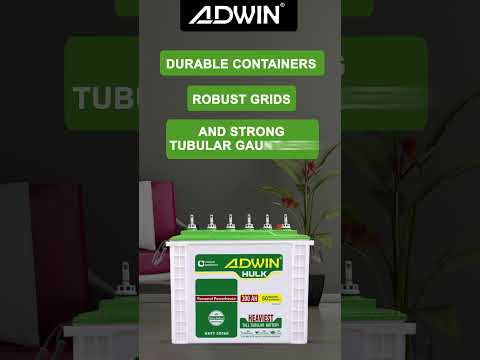
Adwin Batteries: Powering Through Power Cuts, Uninterrupted Life Every Day!

Tap into the sun’s power, boost your savings, & enjoy uninterrupted workflow with Solar Battery.

Adwin Battery at EV EXPO, New Delhi



.jpeg)
.jpeg)


.jpeg)


.jpeg)


