Home Power Backup


The right home power backup depends on how long and how often your power goes out. For short, occasional cuts, an inverter with a battery running your fans, lights and a TV is enough and cheapest. For long daily outages, a hybrid solar system or a generator makes more sense because a battery-only setup runs dry. For the whole house including heavy loads, you are into large systems or a generator. Match the solution to your actual outage pattern and critical load, not to the biggest system a salesperson offers.
The number that decides everything is your critical load: the essential appliances you need running during a cut. Size the backup to that, and both cost and runtime fall into place.
At a glance: backup options compared
Option | Best for | Typical backup | Rough 2026 cost |
Inverter + lead-acid battery | Short, frequent cuts | 2 to 4 hours, basic load | Rs 15,000 to 45,000 |
Inverter + lithium (LFP) battery | Daily cuts, longer life | 3 to 6+ hours | Rs 80,000 to 1,50,000+ |
Hybrid solar + battery | Long daily cuts, bill savings | Hours, recharged by sun | Rs 2.5 to 5 lakh |
Diesel/petrol generator | Long cuts, heavy load | As long as fuel lasts | Rs 15,000 to 60,000+ |
Portable power station | Renters, small loads, travel | 1 to 4 hours, small load | Rs 20,000 to 80,000 |
The one calculation that matters: sizing for runtime
Two numbers size a backup power system: how much power your critical load draws, and how long you need it.
Step 1, add your critical load in watts. For example: 3 fans (3 x 30W BLDC = 90W), 6 LED lights (6 x 10W = 60W), a TV (100W), a router (10W) and a fridge (average 150W) comes to about 410W.
Step 2, choose the inverter size (VA). Inverters are rated in VA, but appliances use watts. Because of power factor (about 0.8), a 1,000VA inverter delivers roughly 800W of real power. For a 410W load with headroom, a 700 to 1,000VA inverter is sensible.
Step 3, size the battery for runtime. Runtime in hours is roughly (battery usable Wh) divided by (load in watts). A 12V 150Ah lead-acid battery holds about 1,800Wh but only about 50 percent is usable, so around 900Wh. At a 410W load: 900 / 410, about 2.2 hours. A lithium (LFP) battery of the same rating gives 80 to 90 percent usable, so more like 3.5 to 4 hours.
Battery | Rated energy | Usable energy | Runtime at 410W |
12V 150Ah lead-acid | ~1,800Wh | ~900Wh (50%) | ~2.2 hours |
12V 150Ah lithium (LFP) | ~1,800Wh | ~1,530Wh (85%) | ~3.7 hours |
Inverter solutions: the India default, and its limits
For 30 years, inverter solutions with a lead-acid battery have been the standard Indian home backup: a box in the corner charged from the grid, giving 2 to 4 hours of basic load during cuts. They are cheap, simple and widely serviced. Their limits are honest to state: lead-acid batteries last only 3 to 5 years (2 to 4 in heat), need occasional water top-ups, deliver only half their rated energy, and recharge only from the grid, so a long outage that outlasts the battery leaves you dark. Upgrading the battery to lithium (LFP) roughly doubles usable runtime and life with near-zero maintenance, at a higher upfront cost.
When a generator or hybrid solar makes more sense
Generator: if outages run for many hours and you need heavy loads (a whole house, motors, an AC), a generator runs as long as you have fuel. The trade-offs are fuel cost, noise, fumes and maintenance, and it does nothing for your bill.
Hybrid solar plus battery: if you have long daily cuts and a big electricity bill, a hybrid solar system recharges the battery from the sun, backs up outages, and cuts your bill year-round. It costs the most upfront (Rs 2.5 to 5 lakh) but is the only option that pays you back through savings. For the storage economics, see the home energy storage guide.
Portable power station: for renters, small critical loads or travel, an all-in-one lithium power station is plug-and-play with no installation, though capacity is limited.
Honest trade-offs
Cheapest is not always right. A lead-acid inverter is the lowest upfront cost but the shortest-lived and shortest-running. Lithium costs more but lasts longer and gives more real runtime, so over 10 years it can be cheaper per hour of backup. Solar is the only bill-saving option but has the highest upfront cost and a multi-year payback. A generator wins on raw duration and heavy loads but loses on noise, fumes, fuel and zero bill benefit. There is no single best; there is a best for your outage pattern.
Who each option suits
- Short, occasional cuts, tight budget: inverter with a lead-acid battery.
- Daily cuts, want longer life and runtime: inverter with an LFP battery.
- Long daily cuts and a high bill: hybrid solar with battery.
- Long cuts, heavy loads (AC, motors): generator, or a large hybrid system.
- Renter or small load: portable power station.
Conclusion
Home power backup is a matching exercise: size a backup power system to your critical load and outage length, not to the biggest box on offer. For short cuts, an inverter with a battery is cheapest; lithium inverter solutions add life and runtime; hybrid solar is the only option that also cuts your bill; and a generator wins for long, heavy-load outages. Do the simple runtime math (usable watt-hours divided by load watts) before you buy. Explore Adwin's home inverters and batteries, and for the storage-versus-economics side of the decision, read Home Energy Storage.
FAQs
What is the best home power backup for frequent short outages?
An inverter with a battery is the best value for short, frequent cuts, running fans, lights, a TV and a fridge for 2 to 4 hours on lead-acid or 3 to 6 hours on lithium. It is cheaper and quieter than a generator and needs no fuel.
How do I size a backup power system?
Add your critical load in watts, choose an inverter with enough VA (a 1,000VA inverter gives about 800W), then size the battery so usable watt-hours divided by load watts gives the runtime you need. For example, 900 usable Wh at a 410W load gives about 2.2 hours.
What are the best inverter solutions, lead-acid or lithium?
Lead-acid inverter solutions are cheapest upfront but last 3 to 5 years and give only about half their rated energy. Lithium (LFP) costs more but lasts 10 to 15 years, delivers 80 to 90 percent usable energy, and needs no maintenance, so it is often cheaper per hour of backup over time.
How long will an inverter battery last during a power cut?
Roughly usable watt-hours divided by your load in watts. A 150Ah lead-acid battery gives about 900 usable Wh, so around 2 hours at a 410W load; the same size in lithium gives about 1,530 usable Wh, so closer to 3.7 hours.
Is a generator or an inverter better for home backup?
An inverter is quieter, cleaner and cheaper for short cuts and light loads. A generator suits long outages and heavy loads like an AC because it runs as long as you have fuel, but it is noisy, needs fuel and maintenance, and does nothing for your electricity bill.
Can home power backup also lower my electricity bill?
Only solar does. A plain inverter simply stores grid power and adds a small conversion loss. A hybrid solar system charges the battery from the sun, backs up outages, and reduces your bill year-round, which is why it costs more upfront but pays back over time.
What is the difference between VA and watts on an inverter?
VA is the inverter's apparent power rating; watts is the real power appliances use. Because of power factor (about 0.8), a 1,000VA inverter delivers roughly 800W. Size the inverter by adding your appliance watts and leaving headroom above that figure.
Do I need a battery for home backup if I have solar?
For daytime running, panels alone can power loads while the sun is up, but you need a battery to keep the power on at night or during an outage. A hybrid inverter with a battery gives both bill savings and backup; solar without storage does not cover a night-time cut.
Featured Videos
Watch insightful guides and product highlights

Adwin Power Partnership Experience

25 Years of Power: What Makes Adwin Two-Wheeler Batteries Reliable

Real experiences. Real words. Real relationships.

What Makes Adwin Power Partnerships Last? | A Partner’s Real Experience
Adwin Power Partnership Experience | Real Story, Real Trust, Real Growth

Reduce Generator Dependency with Lithium Battery Energy Storage | Adwin Power
Connect with us and get a reliable power source for your home with Adwin.

Choose Adwin and Be Bright!
Long Backup Batteries | Adwin Batteries
Build a greener tomorrow by choosing solar power

Say goodbye to interruptions and embrace uninterrupted memories!

Let your lives be uninterrupted with Adwin!

Adwin Car Battery | Best Automotive battery for cars | #adwin #battery #shorts #carbattery #carshort

Adwin Inverter batteries! Order Now and know the difference! #shorts
Trust the backup of Adwin #inverterbatteries to keep your home bright #Adwin #adwinbatteries
Employee Engagement at ADWIN Batteries | Life at ADWIN
बढ़ते बिजली बिल से परेशान? Solar Panel से करें Bill कम | Adwin Power Solar Solution

Adwin Power Meet 2026
Tired of sudden power cuts disrupting your daily life?

Welcome to ADWIN | Employee Induction Program Highlights

Ever wondered what goes behind the making of a reliable battery?

Big Match Tonight? Zero Power Cuts Allowed! ⚽🔋 | Adwin Bheem Inverter Battery

Safety Engineering Training Program at ADWIN
Adwin Solar Batteries | Top-notch solar batteries for maximizing savings
Adwin Inverter Battery | Best Inverter Battery #battery #inverterbattery #Shorts #india
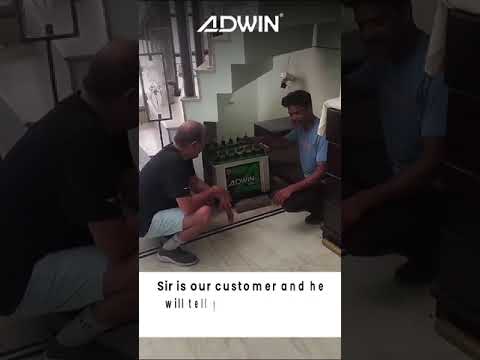
Adwin inverter batteries | Best battery for long lasting performance | Adwin Customer Testimonial
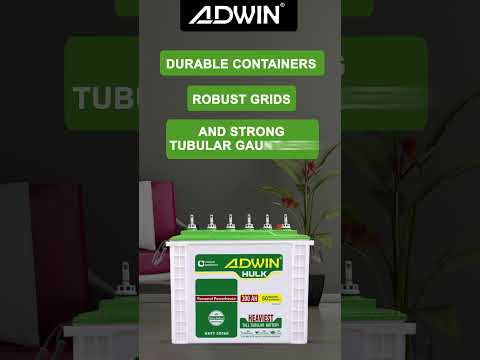
Adwin Batteries: Powering Through Power Cuts, Uninterrupted Life Every Day!

Tap into the sun’s power, boost your savings, & enjoy uninterrupted workflow with Solar Battery.
Adwin Battery at EV EXPO, New Delhi



.jpeg)
.jpeg)


.jpeg)


.jpeg)


