UPS for Home: Complete Guide


A UPS for home is a battery-backed unit that keeps your fans, lights, TV and router running during a power cut, and in Indian retail the words "UPS," "home UPS" and "inverter" are used for much the same product, with two real differences that matter: how fast it switches over, and whether it cleans the power. For a modern home the right buy is a pure sine wave home UPS of the correct VA rating, paired with a battery sized for your backup hours. A pure sine wave unit is non-negotiable now because inverter ACs, LED TVs and other sensitive electronics can hum, misbehave or be damaged on the cheaper square or modified wave.
The two decisions are independent: the UPS/inverter sets how much you can run (power), and the battery sets how long (duration). Size both.
At a glance: home UPS vs inverter vs computer UPS
Type | Switchover | Best for |
|---|---|---|
Home inverter | A short delay (fine for fans, lights, TV) | General home backup |
Home UPS (line-interactive) | Near-instant (about 0 to 10 ms), plus AVR | Homes with PCs and sensitive electronics |
Computer UPS | Instant, but very short backup | Protecting a desktop for a safe shutdown |
UPS vs inverter: the difference that matters
Technically, an inverter has a small changeover delay when the grid fails, which is fine for fans, lights and a TV but can reboot a desktop PC. A home UPS (line-interactive) switches over almost instantly and usually includes automatic voltage regulation (AVR) to hold output near 230V even when the mains sags to 160V or surges to 280V, protecting sensitive electronics. A computer UPS is a different thing again: it switches instantly but gives only minutes of backup, enough to save work and shut down a PC, not to run the house. For most Indian homes, a good pure sine wave home UPS covers both outages and voltage swings.
Why pure sine wave is non-negotiable
Here is the point cheap units gloss over. A pure sine wave (PSW) unit produces power almost identical to the grid, so every appliance runs smoothly. A square or modified sine wave unit is cheaper but produces a rough waveform that hums fans, can overheat or damage LED TVs, and will not properly run a modern inverter (variable-speed) AC, which may fault or refuse to start. The PSW premium in 2026 is only about Rs 800 to Rs 1,500 on sub-2,000VA units and Rs 2,000 to Rs 3,500 on larger ones, which is small against the Rs 50,000+ of appliances it protects. Buy pure sine wave.
How to size a UPS for home (VA rating)
The UPS/inverter is rated in VA; your appliances are rated in watts. Size it in three steps.
- Add the watts of everything you want to run at once during a cut. Example: 4 fans (4 x 30W = 120W), 8 LED lights (80W), a TV (100W), a router (10W), a fridge (150W) is about 460W.
- Add a 25 percent surge margin: 460 x 1.25 is about 575W.
- Convert to VA: at a power factor of about 0.8, a 900 to 1,100VA unit covers roughly 575W with headroom.
Load | Suggested VA | Typical home use |
|---|---|---|
Up to ~500W | 900 to 1,100 VA | Fans, lights, TV, router, fridge |
~500 to 800W | 1,100 to 1,500 VA | Above plus more appliances |
Running a 1 to 1.5 ton AC | 3,500 to 5,000 VA | High-load, large battery needed |
Choosing a UPS and battery for home
A UPS and battery for home is a two-part decision, and the battery is where backup time and most of the cost live.
Backup hours are roughly: (battery Ah x voltage x usable depth x efficiency) divided by load watts. A 150Ah 12V tubular lead-acid battery gives about 900 usable watt-hours (roughly 50 percent usable), so around 2 hours at a 460W load. A lithium (LFP) battery of similar rating gives 80 to 90 percent usable, so 3.5 to 4 hours.
Battery | Rough cost | Usable | Life |
|---|---|---|---|
Tubular lead-acid (150Ah) | Rs 12,000 to Rs 18,000 | ~50% | 3 to 5 years |
Flat-plate lead-acid | Rs 9,000 to Rs 14,000 | ~50% | 2 to 4 years |
Lithium (LFP) | Higher upfront | 80 to 95% | 10 to 15 years |
The naming-confusion trap
Here is the fact that trips buyers up. A shop may sell you a "computer UPS" when you asked for a "home UPS," or a square wave inverter labelled loosely as a "UPS." They are not the same. A computer UPS gives minutes, not hours. A square wave unit is not safe for a modern AC or some electronics. When you buy, confirm three things in writing: pure sine wave output, the VA rating, and the battery type and Ah. Those three settle almost every performance question.
Honest trade-offs
Pure sine wave costs a little more but protects appliances and runs everything, so it is the right default. Line-interactive home UPS with AVR adds voltage protection worth having in areas with swings, at a modest premium over a plain inverter. Lead-acid battery is cheapest upfront but half-usable and shorter-lived; lithium costs more but lasts far longer and gives more real backup, often cheaper per hour over its life. There is no single best; match it to your loads, outage length and budget.
Who each choice suits
- Most homes (fans, lights, TV, fridge): a 900 to 1,100VA pure sine wave home UPS with a 150Ah tubular battery.
- Homes with PCs or sensitive electronics: a line-interactive pure sine wave home UPS with AVR.
- Wanting long life and more runtime: the same UPS with a lithium (LFP) battery.
- Running an AC on backup: a 3,500 to 5,000VA unit with a large battery bank; a big investment.
Bottom line
A UPS for home is a battery-backed unit for keeping your essentials running through power cuts, and the right buy in 2026 is a pure sine wave home UPS of the correct VA rating with a battery sized for your backup hours. Do not confuse a home UPS with a minutes-only computer UPS, insist on pure sine wave for modern ACs and electronics, size the VA to your watts plus 25 percent, and choose the battery for runtime and life. When picking the UPS and battery for home, confirm pure sine wave, VA and battery Ah in writing. Explore Adwin's home inverters and UPS range, compare all backup options in Home Power Backup, and see the storage economics in Home Energy Storage.
FAQs
What is a UPS for home and how does it work?
A UPS for home is a battery-backed unit that keeps fans, lights, TV, router and other essentials running during power cuts. It charges a battery from the grid and, when power fails, converts that stored DC to AC to run your appliances, switching over quickly so you barely notice the cut.
What is the difference between a UPS and an inverter for home?
An inverter has a small changeover delay (fine for fans, lights and TV but can reboot a PC), while a home UPS switches over almost instantly and usually adds voltage regulation for sensitive electronics. In Indian retail the terms overlap; a good pure sine wave home UPS covers both roles.
Is pure sine wave necessary for a home UPS?
Yes, for a modern home. Pure sine wave power runs everything smoothly, while square or modified wave can hum fans, damage LED TVs and fail to run inverter ACs. The pure sine wave premium is small (about Rs 800 to Rs 3,500) against the appliances it protects, so it is the right buy.
How do I size a UPS for home?
Add the watts of everything you will run at once, add a 25 percent surge margin, then convert to VA (at a power factor of about 0.8). For example, a 460W load needs about 575W with margin, which a 900 to 1,100VA unit covers. The battery, sized separately, sets your backup hours.
How do I choose a UPS and battery for home?
Pick the UPS by VA for your load (pure sine wave), then the battery by the backup hours you need. Backup hours are roughly battery Ah times voltage times usable depth times efficiency, divided by load watts. A 150Ah lead-acid battery gives about 2 hours at a 460W load; lithium gives more.
How long will a home UPS run during a power cut?
It depends on the battery and load. A 150Ah tubular lead-acid battery gives about 900 usable watt-hours, so roughly 2 hours at a 460W load. A lithium (LFP) battery of similar rating gives 3.5 to 4 hours because more of its capacity is usable.
Is a computer UPS the same as a home UPS?
No. A computer UPS switches instantly but gives only minutes of backup, enough to save work and shut down a PC. A home UPS (or inverter) is built to run household loads for hours. Do not buy a computer UPS expecting whole-home backup.
How much does a UPS and battery for home cost?
In 2026, a pure sine wave home UPS unit (900 to 1,100VA) costs about Rs 5,000 to Rs 9,000, and a 150Ah tubular lead-acid battery about Rs 12,000 to Rs 18,000, so a typical setup is roughly Rs 17,000 to Rs 27,000. Lithium batteries cost more upfront but last far longer.
Featured Videos
Watch insightful guides and product highlights

Adwin Power Partnership Experience

25 Years of Power: What Makes Adwin Two-Wheeler Batteries Reliable

Real experiences. Real words. Real relationships.

What Makes Adwin Power Partnerships Last? | A Partner’s Real Experience
Adwin Power Partnership Experience | Real Story, Real Trust, Real Growth

Reduce Generator Dependency with Lithium Battery Energy Storage | Adwin Power
Connect with us and get a reliable power source for your home with Adwin.

Choose Adwin and Be Bright!
Long Backup Batteries | Adwin Batteries

Build a greener tomorrow by choosing solar power

Say goodbye to interruptions and embrace uninterrupted memories!

Let your lives be uninterrupted with Adwin!

Adwin Car Battery | Best Automotive battery for cars | #adwin #battery #shorts #carbattery #carshort

Adwin Inverter batteries! Order Now and know the difference! #shorts

Trust the backup of Adwin #inverterbatteries to keep your home bright #Adwin #adwinbatteries

Employee Engagement at ADWIN Batteries | Life at ADWIN

बढ़ते बिजली बिल से परेशान? Solar Panel से करें Bill कम | Adwin Power Solar Solution

Adwin Power Meet 2026
Tired of sudden power cuts disrupting your daily life?

Welcome to ADWIN | Employee Induction Program Highlights

Ever wondered what goes behind the making of a reliable battery?

Big Match Tonight? Zero Power Cuts Allowed! ⚽🔋 | Adwin Bheem Inverter Battery

Safety Engineering Training Program at ADWIN
Adwin Solar Batteries | Top-notch solar batteries for maximizing savings

Adwin Inverter Battery | Best Inverter Battery #battery #inverterbattery #Shorts #india

Adwin inverter batteries | Best battery for long lasting performance | Adwin Customer Testimonial
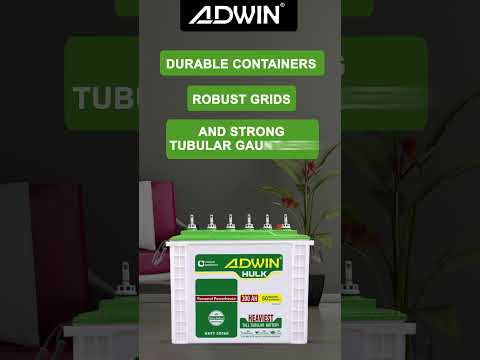
Adwin Batteries: Powering Through Power Cuts, Uninterrupted Life Every Day!

Tap into the sun’s power, boost your savings, & enjoy uninterrupted workflow with Solar Battery.

Adwin Battery at EV EXPO, New Delhi



.jpeg)
.jpeg)


.jpeg)


.jpeg)


