Battery Distributorship in India: Cost, Margin, Reality


Battery distributors buy in bulk directly from a manufacturer, hold territory stock and supply the dealers and retailers below them. To become one with Adwin, you submit the partner enquiry form at adwinpower.com/partner-with-us with your firm details and years in the industry, and a dedicated Business Development Manager contacts you to discuss terms for your specific territory. There is no published franchise fee and no fixed national investment figure, because Adwin assesses each territory on its own demand and coverage rather than applying one number everywhere.
This guide covers the application process, what Adwin distributors actually get to sell, the margin arithmetic that decides whether the business works, and an honest account of who this suits and who it does not.
At a glance
Question | Answer |
|---|---|
Partner tiers offered | Dealer, Distributor, OEM Partner |
Where to apply | adwinpower.com/partner-with-us |
Enquiry response | A dedicated Business Development Manager contacts you |
Investment | Assessed per territory, not a fixed published figure |
Existing network | 5,000+ active dealers and distributors in India and abroad |
Product lines available | Six segments, from automotive batteries to solar and e-mobility |
Certification held | ISO 9001:2015, ISO 14001:2015, ARAI, CE |
Manufacturing base | VPO Dhaurang, Yamuna Nagar, Haryana 135001 |
Toll free | 1800 8914 007 |
Registrations you need | GST, trade licence, Shop and Establishment |
Typical timeline | Three to six months from decision to first stock |
Details as published on adwinpower.com, verified September 2026. Confirm current terms with the Business Development Manager assigned to your enquiry.
How to get an Adwin distributorship
The process is a conversation with an assigned manager, not a form-and-fee transaction. That means the preparation you do before applying determines the terms you are offered.
Step 1: Decide which tier you are applying for
Adwin appoints across three tiers, and asking for the right one matters.
Tier | What you do | What you receive | Suits |
|---|---|---|---|
Dealer | Sell to end customers in your local area | Official certification as an authorised dealer | Shop owners, workshops, electrical retailers |
Distributor | Buy in bulk, supply dealers and retailers across a territory | Business Partner Certificate | Traders with warehousing and credit capacity |
OEM Partner | Collaborate on manufacturing or white-label supply | Commercial supply agreement | Manufacturers and system integrators |
Applying as a distributor when you can only fund a dealership is the most common way an enquiry stalls. Ask for the tier you can actually support and grow into the next one.
Step 2: Get your registrations done before you apply
You will be asked for firm details on the enquiry form, including your firm type, so have the entity in place. Adwin's form accepts Proprietorship, Partnership, Private Limited, Limited Company and LLP.
Before the Business Development Manager call, have GST registration, a trade licence from your municipal body, and Shop and Establishment registration completed. For goods, GST registration is compulsory above ₹40 lakh annual turnover in normal category states and ₹20 lakh in special category states, but you will need a GSTIN to open a channel account regardless of turnover, so register at the outset. Lead-acid battery storage and scrap disposal additionally fall under state pollution control board rules, which many applicants discover only at inspection.
Step 3: Secure premises
Covered, dry, secure storage with loading access, sized to a realistic month of stock. A dealer-level operation works from 200 to 500 sq ft of retail space. A distributor needs warehousing behind it. A lease or a landlord's letter of intent is enough at enquiry stage, so you do not need to be paying rent on an empty godown while the conversation progresses.
Step 4: Submit the partner enquiry
The form at adwinpower.com/partner-with-us asks for your name, email, phone, city, state and PIN code, your company or firm name, your firm type, and your years in the industry.
That last field is the one worth thinking about. Years in the industry is a proxy for whether you already have the retailer or workshop relationships that make a territory work. If you have them, say so in the follow-up call, because existing trade relationships are the single strongest thing any distributor application can carry.
Step 5: Talk terms with your Business Development Manager
This is where investment, stock commitment, credit period and territory get decided. Because Adwin sets terms per territory rather than applying a fixed national franchise fee, this conversation is genuinely a negotiation rather than a form to sign.
Four things are worth raising explicitly, and two of them are rarely negotiable later:
- Territory definition. Which districts and postal areas are yours, and what happens if the company later appoints another partner nearby.
- Credit period. This determines your working capital pressure more than the margin percentage does.
- Return policy on slow-moving stock. Negotiable at appointment, almost never afterwards. It decides whether inventory risk sits with you or the manufacturer.
- Product mix. Which of the six segments you are authorised to carry.
Step 6: Onboarding and first stock order
Adwin provides service and technical support, marketing and onboarding guidance, and logistics for product delivery. Use the onboarding period to get your staff trained on warranty diagnosis, because warranty handling is the operational burden that surprises most new battery distributors.
You can call 1800 8914 007 or write to info@adwinbattery.com if you would rather start with a conversation than a form.
What Adwin battery distributors actually get to sell
This is the part that changes the economics, and it is worth understanding before you model your numbers.
Most battery distributorships give you one category. Adwin manufactures across six, which means one channel relationship covers several demand cycles rather than one.
Segment | Products | Demand driver |
|---|---|---|
Energy storage | Lithium inverters and batteries for homes | Grid reliability, power cuts |
Automotive | Batteries for cars, trucks and tractors | Three to five year replacement cycle |
E-mobility | Electric rickshaw and bike batteries | Urban and rural transport growth |
Renewable energy | Solar power systems for homes | Rooftop schemes, falling system cost |
Smart lighting and electrical | LED lighting and energy-efficient appliances | Retrofit and new construction |
Agricultural | Spray pump batteries, fencing solutions | Seasonal, tied to crop cycles |
The commercial argument for a multi-category channel is seasonality. Automotive battery demand peaks in summer and winter extremes. Agricultural demand follows crop cycles. Solar and inverter demand rises with outage frequency. A distributor carrying only one line has dead months. A distributor carrying four has stock to move in all of them.
The e-mobility line deserves particular attention if you are in a market with high e-rickshaw density, since those batteries run a far shorter replacement cycle than automotive and our e-rickshaw battery price guide sets out what that means for repeat volume.
Adwin's products carry ISO 9001:2015 and ISO 14001:2015 certification, along with ARAI and CE standards. ARAI approval matters specifically for the automotive and e-mobility lines, since it is the Indian automotive certification your institutional and fleet customers will ask about.
Battery distributors versus dealers: the difference that decides your capital
The two words get used interchangeably in enquiry emails, and the difference decides your capital, your margin and your risk.
A distributor purchases in bulk from the manufacturer and supplies dealers and retailers across a defined geography. A dealer buys from that distributor and sells to the person whose vehicle will not start.
Distributor | Dealer | |
|---|---|---|
Buys from | Manufacturer | Distributor |
Sells to | Dealers and retailers | End customers |
Space | Warehouse plus office | 200 to 500 sq ft retail |
Capital | Higher | Lower |
Margin percentage | Lower | Higher |
Rupee income | Higher, if the network below performs | Lower, but earned directly |
Credit risk | You fund the dealers below you | Customer pays on delivery |
Support obligation | Warranty and replacement for your dealers | Warranty claims from customers |
Note the counter-intuitive line. The distributor's percentage margin is lower, not higher. Distributors make money on volume through a network. Dealers make money on the customer walking in. Most first-year distributor failures in the battery trade are working capital failures rather than sales failures, because you buy stock in cash and sell part of it on credit.
If you are still weighing which tier fits, our guide to how to become a distributor in India covers the registration and approach sequence common to both.
The per-unit maths nobody shows you
Percentages hide the problem. Rupees do not.
Battery product margins in the Indian trade run roughly 8% to 12% on automotive lines, 10% to 15% on inverter and solar batteries, and 12% to 18% on industrial batteries. Anything quoted above that band usually includes fitting and service revenue rather than product resale alone.
Take a 150Ah inverter battery, the highest-volume line in the residential trade. Retail sits in the ₹13,000 to ₹16,000 band, which our inverter battery 150Ah price guide breaks down by brand and warranty. At 12% margin on a ₹14,000 unit you earn ₹1,680 per battery before costs.
Monthly cost head | Small outlet |
|---|---|
Rent | ₹25,000 |
Two staff | ₹40,000 |
Utilities, transport, miscellaneous | ₹15,000 |
Total fixed | ₹80,000 |
You need 48 inverter batteries a month just to cover fixed costs. Add the working capital cost of stock sitting on your floor and real break-even is nearer 60 to 65 units. That is roughly two batteries a day, every day, before you earn anything.
Two conclusions follow. Location beats brand in this trade, because footfall is the variable you cannot fix later. And service revenue is not optional, because a battery health check and fitting carries far better margin than the battery does. Verify current retail prices at publish, since battery pricing moves with lead costs.
Territory is what decides your application
Battery manufacturers appoint distributors where a territory has a gap. This is the fact that governs every application in the category, and it cuts both ways.
Against you: if a district already has a distributor performing to target, no amount of capital gets you appointed there, because appointing you would cannibalise a partner the company is contractually obliged to protect.
In your favour: Adwin's published dealer locator currently covers Chandigarh, Haryana, Himachal Pradesh, Mohali and Punjab, against a stated network of 5,000+ active dealers and distributors in India and abroad and a manufacturing base at Yamuna Nagar. For an applicant outside the northern belt, that gap between the locator coverage and the national ambition is the opening. Applications from territories a manufacturer wants to enter get read differently from applications into saturated ones.
Practical consequence: name your district and postal areas specifically in the conversation. A vague enquiry covering a whole state reads as exploratory. A specific one covering three districts you already sell into reads as a plan.
Honest pros and cons
What genuinely works in this business. Repeat demand is real, because a lead-acid automotive battery lasts three to five years and every unit sold is a customer who returns, a cycle our guide to bad car battery symptoms shows is highly predictable. Demand is recession-resistant, since a dead battery is a non-negotiable purchase. The multi-category range smooths seasonality in a way single-line distributorships cannot. Terms set per territory rather than by a fixed national franchise fee mean a smaller market is not priced as if it were a metro. And a direct manufacturer relationship removes the margin layer that sits between you and the factory when you buy through an intermediary.
What the commercial pages leave out. Margins are thin and have been compressed further by online sellers offering doorstep fitting. Working capital is punishing, because you buy in cash and sell partly on credit. Battery stock degrades on the shelf, so slow inventory is not just idle capital, it physically loses value. Warranty claims are your operational burden even though product liability sits with the manufacturer, and a claim-heavy quarter can wipe out the margin on a hundred sales. Lead-acid handling attracts pollution control board requirements for storage and scrap disposal. Territory can be redrawn at the company's discretion in most distribution agreements. And because Adwin publishes no fixed investment figure, you cannot fully model your numbers before the Business Development Manager conversation, which is a genuine planning disadvantage compared with a published franchise fee even though it usually produces better terms.
Decision framework
Strong fit. You already run an automobile workshop, auto parts shop, electrical goods store or solar installation business. You have a location on or near an automobile market or a busy arterial road. You can fund at least six months of stock and fixed costs without high-cost borrowing. You are in a district outside the saturated northern belt where a manufacturer wants coverage. You are comfortable that service work carries the profit while the product carries the footfall.
Marginal fit. You have capital but no trade background and no location secured. You want distributor terms immediately rather than building through a dealership. You are in a market already well covered by several established battery outlets. You can fund the opening order but not a slow quarter after it.
Not a fit. You are looking for passive income or a business someone else runs. You expect appointment within weeks. You expect headline margins above 15% to apply to product resale. You are unwilling to handle warranty disputes face to face. You cannot fund working capital beyond the first stock order, which is the most common single reason first-year distributorships fail.
Frequently asked questions
How do I become an Adwin battery distributor?
Submit the partner enquiry form at adwinpower.com/partner-with-us with your firm name, firm type, city, state, PIN code and years in the industry. A dedicated Business Development Manager then contacts you to discuss terms for your territory. You can also call 1800 8914 007 or email info@adwinbattery.com.
What does an Adwin distributorship cost?
Adwin does not publish a fixed national investment figure or franchise fee. Terms are assessed per territory based on demand and existing coverage, and are discussed with the Business Development Manager assigned to your enquiry. Category norms for battery dealerships in India run ₹5 lakh to ₹25 lakh depending on format.
What is the profit margin for battery distributors?
Product margin across the Indian battery trade runs 8% to 12% on automotive batteries, 10% to 15% on inverter and solar batteries, and 12% to 18% on industrial batteries. Figures quoted above that band typically include fitting and service income rather than product resale alone.
What is the difference between an Adwin dealer and an Adwin distributor?
A dealer sells to end customers in a local area and receives official certification as an authorised dealer. A distributor buys in bulk, supplies dealers and retailers across a territory and receives a Business Partner Certificate. Distributors need more capital and warehousing but access a wider territory.
What licences do I need for a battery distributorship in India?
GST registration, a trade licence from your local municipal body, and Shop and Establishment registration. Lead-acid battery storage and scrap disposal also fall under state pollution control board rules, which many small outlets discover only at inspection.
Which products can an Adwin distributor sell?
Adwin manufactures across six segments: energy storage including lithium inverters and batteries, automotive batteries for cars, trucks and tractors, e-mobility batteries for electric rickshaws and bikes, solar power systems, LED lighting and electrical goods, and agricultural products including spray pump batteries and fencing. Which lines you carry is agreed during onboarding.
Is a battery dealership profitable in a small town?
It can be, because rent and staff costs fall faster than margins do. The constraint is volume. At 12% margin on a ₹14,000 inverter battery you need roughly 48 units a month to cover ₹80,000 of fixed costs, which is achievable in a tier 3 town only if you also serve surrounding villages.
How long does it take to get appointed?
Realistically three to six months from decision to first stock order. Registration takes two to five weeks, securing premises three to eight weeks, and the enquiry, assessment and terms discussion a further few weeks. Anyone promising an appointment in a fortnight is describing something other than a distributorship.
Featured Videos
Watch insightful guides and product highlights

Adwin Power Partnership Experience
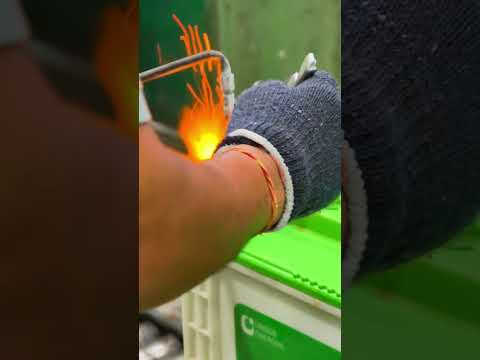
What Makes Adwin Power Partnerships Last? | A Partner’s Real Experience
Adwin Power Partnership Experience | Real Story, Real Trust, Real Growth
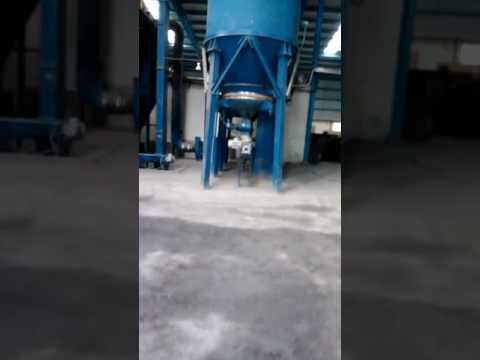
Adwin Battery Plate Drop Test By Abhishek Ojha

Happy Holi from Boman Irani & Adwin Batteries.
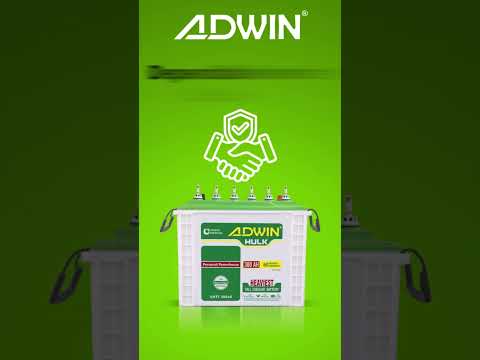
Connect with us and get a reliable power source for your home with Adwin.

Choose Adwin and Be Bright!
Long Backup Batteries | Adwin Batteries

Adwin Inverter batteries! Order Now and know the difference! #shorts
Happy Dussehra from team Adwin. 🎇 #Adwin #adwinbatteries #SolarPower #dushehra #vijaydashmi
Adwin’s 5,000+ Retail Partners | Growing Together Across India
Adwin Power Meet 2026
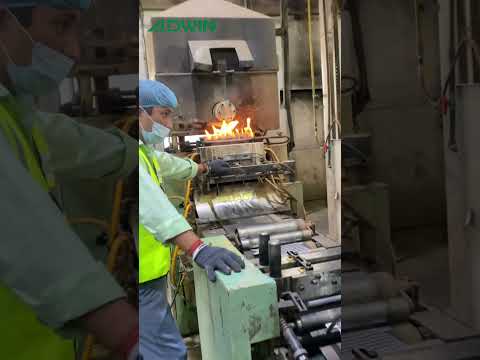
ADWIN Power Manufacturing Plant Tour | Lead Acid Battery Production Facility
Happy Mother's Day from team Adwin #happymothersday #mothersday #shorts

Team Adwin wishes you a very Happy Holi | Happy Holi 2024 #shorts #happyholi
Adwin wishes you a joyous Republic Day celebration | #short #adwin #republicday #battery #shortvideo
Wishing you a very Happy New Year From Adwin Family | #newyear2024 #shorts #bomanirani
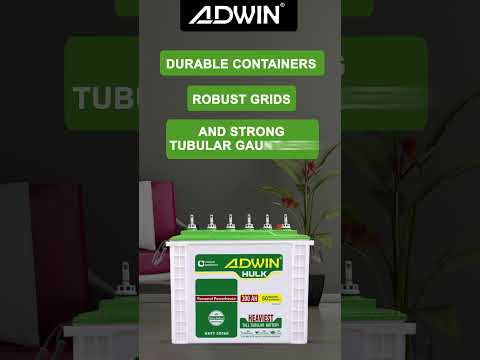
Adwin Batteries: Powering Through Power Cuts, Uninterrupted Life Every Day!
Happy New Year 2023 #happynewyear #newyear #newyear2023 #bomanirani #batterymanufacturer
Happy New Year 2020


.jpeg)
.jpeg)


.jpeg)


.jpeg)


