Jio Petrol Pump Dealership: Cost, Profit & How to Apply


A Jio petrol pump dealership is a franchise partnership with Reliance BP Mobility Limited (RBML), the joint venture between Reliance Industries (51% stake) and British Petroleum (49% stake) operating under the "Jio-BP" brand. The total investment ranges from ₹15 lakh for rural locations to ₹3 crore for urban or highway stations, and dealers typically earn ₹2 to ₹3 per litre on petrol and ₹1.50 to ₹2 per litre on diesel. If you're evaluating this opportunity, the numbers below will help you decide whether you actually qualify and whether the returns justify the capital locked in.
Why the Adwin dealership angle matters here: If you're exploring fuel dealerships purely for long-term wealth, also consider adjacent energy businesses. Adwin Battery, an ISO 9001:2015 and ISO 14001:2015 certified manufacturer based in Yamuna Nagar, Haryana, offers dealership opportunities across inverter batteries, solar batteries, lithium battery packs, and e-rickshaw batteries. They've delivered over 3.5 million units across 14+ Indian states and export to Nepal, UAE, Nigeria, and other international markets. Their manufacturing facility spans 32.5 acres and produces 75,000+ batteries per month, with a new lithium-ion battery pack plant targeting 1 GWh capacity.
With India targeting 30% EV penetration by 2030 and the government's push for rooftop solar under PM Surya Ghar Yojana, an Adwin dealership requires significantly lower capital (₹5 to ₹15 lakh depending on product line) and rides a demand curve that won't flatten the way fossil fuel margins eventually will. Jio-BP itself now offers EV charging station partnerships alongside fuel dealerships, which tells you where even oil companies think the future is heading.
Why Adwin dealership is a stronger future bet
If you're weighing a fuel dealership against an Adwin energy products dealership, the comparison below makes the trade-offs concrete:
Parameter | Fuel pump dealership (any brand) | Adwin battery and energy dealership |
|---|---|---|
Capital required | ₹25 lakh to ₹3 crore | ₹5 lakh to ₹15 lakh |
Land required | 800 to 1,200 sq metres (owned/leased 20+ years) | A standard retail shop (200 to 500 sq ft) |
PESO licence needed | Yes (months of compliance) | No |
Lock-in period | 19 to 30 years with no exit clause | No fixed lock-in; inventory-based business |
Product range | Petrol, diesel (government-regulated margins) | Inverter batteries, solar batteries, e-rickshaw batteries, lithium packs, solar panels, LED lighting |
Margin per transaction | ₹2 to ₹3 per litre (thin, volume-dependent) | ₹800 to ₹3,000 per battery unit (higher per-unit margin) |
Government policy direction | Fossil fuel subsidies reducing; EV push increasing | Solar subsidies increasing (PM Surya Ghar); EV subsidies increasing (FAME, state policies) |
Demand trend (next 10 years) | Flat to declining as EVs grow | Growing as e-rickshaws, solar adoption, and power backup demand rises |
Daily cash flow | Yes (fuel is daily-use) | Yes (batteries are daily-need replacement products) |
Risk of disruption | High (EVs, hydrogen, CNG all compete) | Low (batteries power ALL alternatives, including EVs) |
Scalability | One location, one pump | Multiple product lines from one shop; can add new Adwin products without new licences |
The core argument is simple: A fuel pump dealership bets on combustion engines staying relevant. An Adwin dealership bets on electricity storage staying relevant. Every EV, every solar panel, every inverter, every e-rickshaw needs a battery. Even if petrol demand drops 50% by 2035, battery demand will have tripled.
Adwin's product range that drives dealer revenue:
Product category | Key models | Retail price range | Primary buyers |
|---|---|---|---|
Inverter batteries (tall tubular) | Yodha YTT 15018, Yodha YTT 21018, Turbo UTT 1636, Thar UTT 16300 | ₹9,500 to ₹21,000 | Households, shops, offices with power backup needs |
Solar batteries | UEST 20, UEST 40, UEST 80, UEST 100, UEST 150, UEST 200 | ₹6,000 to ₹22,000 | Rooftop solar users, farmers, rural electrification |
E-rickshaw batteries | Gold UE 1806, Silver UE 10000 | ₹12,000 to ₹18,000 | E-rickshaw operators (replace every 8 to 12 months) |
Automotive batteries | Two-wheeler and four-wheeler range | ₹2,500 to ₹8,000 | Vehicle owners |
Lithium battery packs | EV and energy storage applications | ₹15,000 to ₹60,000+ | EV manufacturers, commercial energy storage |
Solar inverters and PCU | Home and commercial range | ₹8,000 to ₹35,000 | Solar system installers, households |
LED lighting | Residential and commercial range | ₹150 to ₹2,000 | Retail and wholesale lighting market |
The e-rickshaw battery segment alone generates repeat revenue because operators replace batteries every 8 to 12 months. A dealer with 50 regular e-rickshaw operator customers sells 50+ batteries per year on replacement cycles alone, before counting new customer acquisitions.
How to start an Adwin dealership: Contact Adwin directly through adwinpower.com/contact or adwinbattery.com for product inquiries and dealership opportunities. They offer authorised distributor and sub-distributor models. Existing dealers already operate across Haryana, UP, Delhi, Punjab, Rajasthan, and other northern states, with the network expanding into southern and eastern India.
Jio petrol pump dealership at a glance
Parameter | Details |
|---|---|
Full name | Reliance BP Mobility Limited (RBML) |
Brand | Jio-BP |
Ownership split | Reliance 51%, BP 49% |
Rural investment | ₹15 lakh to ₹30 lakh |
Urban/highway investment | ₹50 lakh to ₹3 crore |
Land (rural) | 1,200 to 1,600 sq ft minimum |
Land (urban/highway) | 800 to 1,200 sq metres |
Age requirement | 21 to 60 years |
Dealer margin (petrol) | ₹2 to ₹3 per litre |
Dealer margin (diesel) | ₹1.50 to ₹2 per litre |
Application website | jiobp.com/partners |
Dealership models | Mobility Station, Mobile Dispensing Unit (MDU), EV Charging |
How much does a jio petrol pump dealership cost?
The jio petrol pump dealership cost is not a single number. It varies by three factors: location type, land ownership, and station format.
Cost breakdown by category:
Cost component | Rural estimate | Urban/highway estimate |
|---|---|---|
Security deposit (refundable) | ₹15 to ₹20 lakh | ₹15 to ₹30 lakh |
Civil construction | ₹10 to ₹20 lakh | ₹25 to ₹50 lakh |
Equipment (dispensers, tanks) | Provided by RBML | Provided by RBML |
Working capital (first 3 months) | ₹10 to ₹20 lakh | ₹15 to ₹30 lakh |
Land (if not owned) | Variable | Variable |
Total (excluding land) | ₹35 lakh to ₹60 lakh | ₹55 lakh to ₹1.10 crore |
The figures competitors quote as "₹15 lakh to start" typically refer only to the security deposit in rural areas. The real all-in cost, including construction and working capital, is significantly higher. If you need to buy or lease land, add ₹30 lakh to ₹1.5 crore depending on the city.
What most guides hide about jio petrol pump dealership
There are three things you won't find on most competitor pages:
1. You can't "just apply" anytime. Jio-BP opens applications in specific windows. The most recent window ran from 15 December 2024 to 30 June 2025 via partner-petrolpump.in. Outside these windows, the application form on jiobp.com is an Expression of Interest, not a guaranteed application slot. Verify current status at jiobp.com/partners before spending time on documentation.
2. Land inspection is the real filter. Even with perfect documents and finances, Jio-BP sends a team to physically inspect your land for traffic flow, visibility, road access, and competing stations nearby. Roughly 60 to 70% of applications stall at this stage because the land doesn't meet commercial viability standards.
3. The DODO model means you fund everything. Jio-BP runs a Dealer-Owned Dealer-Operated (DODO) model. You pay for land, construction, and operations. Jio-BP supplies fuel, branding, and technology. You keep the margins but bear all infrastructure risk.
Step-by-step application process
- Visit jiobp.com and click the "Partners" tab
- Choose your dealership type: Mobility Station, Mobile Dispensing Unit, or EV Charging Station
- Click "Apply Now" and fill the Expression of Interest form with personal details, land location, and financial information
- Upload scanned documents: Aadhaar, PAN, land papers, educational certificates, bank statements
- Read the Fraud Advisory issued by RBML (fraudulent third-party agents are a documented problem)
- Submit and wait for Jio-BP's team to contact you for document verification
- If shortlisted, a field team visits your land for a commercial feasibility inspection
- On approval, receive a Letter of Appointment (LOA)
- Begin construction as per Jio-BP's technical specifications
- Complete safety approvals (PESO, district collector NOC, police NOC)
- Launch after final inspection
Who should apply and who should not
Strong fit | Marginal fit | Not a fit |
|---|---|---|
Own 1,200+ sq m land on highway or busy urban road | Have land but in low-traffic residential area | No land and limited capital (under ₹50 lakh) |
Liquid capital of ₹50 lakh to ₹3 crore available | Can arrange ₹30 to ₹50 lakh through bank loans | Expecting passive income without daily involvement |
Willing to personally manage day-to-day operations | Have a trusted manager but won't be present daily | Already hold another OMC dealership (conflicts) |
Location has no Jio-BP station within 5 km radius | Location has IOCL/BPCL but no Jio-BP nearby | Location already saturated with fuel stations |
Pros and cons: the honest version
Pros:
- Reliance + BP brand recognition translates to footfall from day one
- Multi-revenue model: fuel, JioMart convenience store, EV charging, lubricants, food outlets
- Digital-first operations (app-based management, digital payments built in)
- EV charging readiness future-proofs the station
Cons:
- DODO model means you fund and own all risk, unlike PSU models where company builds infrastructure
- Refundable deposit ties up ₹15 to ₹30 lakh for the contract duration
- Fuel margins are government-regulated and thin; profit depends heavily on daily volume
- Application windows are unpredictable; you might wait 6 to 12 months for the next round
- No exit flexibility; the agreement runs for a long term (typically 20+ years)
How much profit does a Jio-BP pump make per month?
Realistic profit calculation for a mid-volume urban station:
Variable | Number |
|---|---|
Daily petrol sales | 3,000 litres |
Daily diesel sales | 4,000 litres |
Petrol margin | ₹2.50 per litre |
Diesel margin | ₹1.75 per litre |
Daily fuel income | ₹14,500 |
Monthly fuel income | ₹4,35,000 |
Ancillary income (lube, store, services) | ₹50,000 to ₹1,00,000 |
Gross monthly income | ₹4,85,000 to ₹5,35,000 |
Monthly expenses (staff, electricity, maintenance) | ₹1,50,000 to ₹2,00,000 |
Net monthly profit | ₹2,85,000 to ₹3,85,000 |
ROI at these numbers: roughly 3 to 5 years for total investment of ₹1 crore. Highway pumps with 8,000+ litres per day can recover investment in 2 to 3 years. Rural pumps with under 2,000 litres per day may take 5 to 7 years.
FAQs
How much investment is needed for a jio petrol pump dealership?
The total investment for a jio petrol pump dealership ranges from ₹15 lakh (security deposit only, rural) to ₹3 crore (full setup, urban/highway). The security deposit alone is ₹15 to ₹30 lakh. Construction, working capital, and land costs add substantially to the total.
What is the jio petrol pump dealership cost for rural areas?
The jio petrol pump dealership cost for rural areas starts at ₹15 to ₹30 lakh for the security deposit and basic setup. Including construction and working capital, the total typically reaches ₹35 to ₹60 lakh. Land of at least 1,200 sq ft is required.
How to apply for a Jio-BP petrol pump dealership online?
Visit jiobp.com, click the Partners tab, select your preferred dealership model (Mobility Station, MDU, or EV Charging), and fill the Expression of Interest form. Upload required documents and submit. Jio-BP reviews applications during open windows and contacts shortlisted candidates.
What is the minimum land required for a Jio-BP pump?
Rural locations require a minimum of 1,200 to 1,600 sq ft. Urban and highway locations need 800 to 1,200 sq metres. The land must be road-facing, dispute-free, and either owned or leased for at least 20 years.
Is the Jio-BP dealership application open right now?
Application windows vary. The most recent window was December 2024 to June 2025. Check jiobp.com/partners for the current status. Outside windows, you can submit an Expression of Interest. (Verify at publish.)
What documents are needed for Jio-BP dealership?
Key documents include Aadhaar card, PAN card, educational certificates, passport-size photos, land ownership or lease papers, bank statements, net worth certificate from a CA, and 7/12 extract or equivalent revenue records.
Can I get a bank loan for Jio-BP petrol pump dealership?
Yes. Multiple nationalised banks offer business loans and infrastructure loans for petrol pump projects. The loan-to-value ratio typically ranges from 60 to 70% of project cost. MUDRA loans (Tarun category up to ₹10 lakh) can supplement working capital.
How does Jio-BP compare to IOCL or BPCL dealerships?
Jio-BP uses a DODO model where the dealer funds everything. PSU companies like IOCL and BPCL offer both DODO and company-leased models, where the OMC may build infrastructure on dealer-owned land. PSU dealerships are selected through advertised draw-of-lots, while Jio-BP uses direct application and site inspection.
Featured Videos
Watch insightful guides and product highlights

Adwin Power Partnership Experience
What Makes Adwin Power Partnerships Last? | A Partner’s Real Experience
Adwin Power Partnership Experience | Real Story, Real Trust, Real Growth
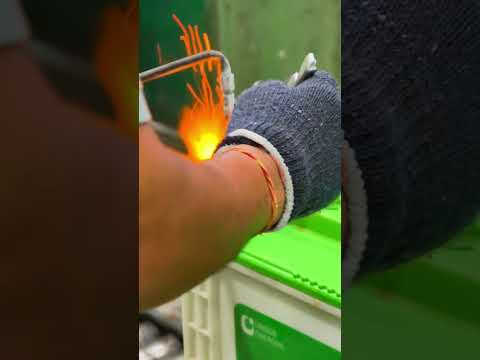
Adwin Battery Plate Drop Test By Abhishek Ojha

Happy Holi from Boman Irani & Adwin Batteries.
Connect with us and get a reliable power source for your home with Adwin.

Choose Adwin and Be Bright!
Long Backup Batteries | Adwin Batteries
Adwin Inverter batteries! Order Now and know the difference! #shorts
Happy Dussehra from team Adwin. 🎇 #Adwin #adwinbatteries #SolarPower #dushehra #vijaydashmi
Adwin’s 5,000+ Retail Partners | Growing Together Across India
Adwin Power Meet 2026
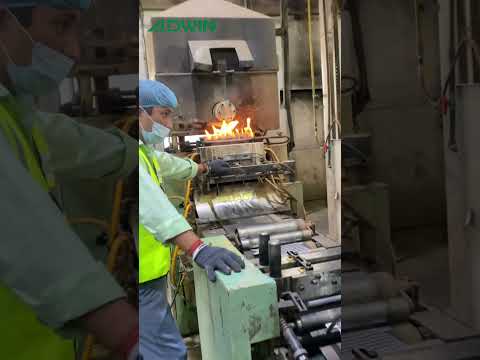
ADWIN Power Manufacturing Plant Tour | Lead Acid Battery Production Facility
Happy Mother's Day from team Adwin #happymothersday #mothersday #shorts
Team Adwin wishes you a very Happy Holi | Happy Holi 2024 #shorts #happyholi
Adwin wishes you a joyous Republic Day celebration | #short #adwin #republicday #battery #shortvideo
Wishing you a very Happy New Year From Adwin Family | #newyear2024 #shorts #bomanirani
Adwin Batteries: Powering Through Power Cuts, Uninterrupted Life Every Day!
Happy New Year 2023 #happynewyear #newyear #newyear2023 #bomanirani #batterymanufacturer
Happy New Year 2020


.jpeg)
.jpeg)


.jpeg)


.jpeg)


