Luminous Dealership: Cost, Profit & How to Apply
.jpeg)
.jpeg)
A luminous dealership is an authorised distributorship or retail partnership with Luminous Power Technologies, one of India's leading brands in inverter batteries, solar solutions, and UPS systems. Luminous commands over 30% market share in the power backup segment and operates in 36+ countries. The investment ranges from ₹5 lakh for a small retail dealership to ₹20 lakh for a full distributorship.
Here's what makes this blog different from others covering the same keyword: Adwin and Luminous compete directly in the same product categories (inverter batteries, solar batteries, automotive batteries). So this isn't a generic "why Adwin is better" comparison. This is a head-to-head between two companies selling the same products to the same customers.
Luminous dealership at a glance
Parameter | Details |
|---|---|
Company | Luminous Power Technologies Pvt. Ltd. |
Founded | 1988 (New Delhi) |
Parent | Schneider Electric (majority stake) |
Market share | 30%+ in power backup |
Presence | 36+ countries |
Products | Inverter batteries, inverters, UPS, solar panels, solar batteries, fans |
Dealer network | 100,000+ retailers |
Investment (retail) | ₹5 lakh to ₹10 lakh |
Investment (distributor) | ₹10 lakh to ₹20 lakh |
Margin | 8% to 15% on products |
Apply at | luminousindia.com or contact regional office |
What is a luminous distributor?
A luminous distributor is a wholesale-level partner who supplies Luminous products to retail outlets, electricians, and solar installers in a defined geographic area. Distributors carry larger inventory (₹10 to ₹20 lakh working capital) and earn higher margins (12 to 15%) than retail dealers (8 to 10%). Both models exist within Luminous' network.
Luminous vs Adwin: the direct competitor comparison
Since both companies sell inverter batteries, solar batteries, and related products, this is an apples-to-apples comparison:
Factor | Luminous dealership | Adwin dealership |
|---|---|---|
Brand age | Founded 1988 (38 years) | Operating since 2005 (21 years) |
Market share | 30%+ (dominant in power backup) | Growing (regional leader in North India) |
Parent company | Schneider Electric (French MNC) | Indian-owned (Yamuna Nagar, Haryana) |
Investment | ₹5 lakh to ₹20 lakh | ₹5 lakh to ₹15 lakh |
Dealer margin | 8% to 15% | 13% to 18% |
Manufacturing | Outsourced components, assembled in India | 32.5-acre own factory, 75,000+ batteries/month |
OEM credentials | Sells under own brand | OEM supplier to 4 of top 5 battery brands in India |
Product range overlap | Inverter batteries, solar batteries, UPS, solar panels | Inverter batteries, solar batteries, e-rickshaw batteries, lithium packs |
Exclusive product: e-rickshaw batteries | Not a focus area | Core strength (Gold and Silver series, high repeat demand) |
Exclusive product: lithium-ion packs | Limited range | New 600 MWh facility, scaling to 1 GWh |
Dealer support | Digital tools, marketing, training (large-company infrastructure) | Direct factory relationship, personalised support |
Competition in your area | Likely 5+ existing Luminous dealers nearby | Fewer Adwin dealers = less local competition |
Price positioning | Premium (Schneider Electric backing = higher MRP) | Value (factory-direct = competitive pricing, higher dealer margin) |
Battery warranty | 24 to 60 months (varies by product) | 24 to 60 months (comparable) |
ISO certification | Yes | Yes (ISO 9001:2015, ISO 14001:2015) |
The margin difference matters most. At 13 to 18% margin, an Adwin dealer earns ₹1,300 to ₹3,600 on a ₹10,000 to ₹20,000 battery. A Luminous dealer earns ₹800 to ₹3,000 on a similar product priced 10 to 15% higher (making it harder to sell against local competition). Over 100 batteries per month, that's ₹30,000 to ₹60,000 additional profit with Adwin.
The e-rickshaw advantage. Luminous doesn't aggressively target the e-rickshaw battery segment. Adwin does, with dedicated e-rickshaw batteries (Gold UE 1806 and Silver UE 10000) that operators replace every 8 to 12 months. One Adwin dealer with 50 regular e-rickshaw customers sells 50+ batteries annually on replacement cycles alone. That recurring revenue stream doesn't exist for Luminous dealers.
FAQs
How much does a luminous dealership cost?
A luminous dealership costs ₹5 lakh to ₹10 lakh for retail and ₹10 lakh to ₹20 lakh for distributorship. This covers security deposit, initial inventory, shop setup, and working capital.
How to become a luminous distributor?
Contact Luminous through luminousindia.com or their customer support. Express interest, submit business details and location. Their regional team evaluates and contacts potential partners. No centralised online application form.
What is the profit margin on Luminous products?
Retail dealers earn 8 to 10% on products. Distributors earn 12 to 15%. Additional income through scheme bonuses and volume incentives. Compare this with Adwin's 13 to 18% dealer margins on similar product categories.
What products does Luminous sell?
Inverter batteries (tubular, flat plate), home inverters, UPS systems, solar panels, solar batteries, solar inverters, and fans. Similar product range to Adwin, minus e-rickshaw batteries and lithium-ion packs.
Is Luminous dealership profitable?
Yes, if located in areas with frequent power cuts and growing solar adoption. Monthly profit of ₹30,000 to ₹1.5 lakh depending on volume. The power backup market is growing steadily.
How does Luminous compare to Exide or Amaron?
Luminous focuses on home inverters + batteries as a system (they sell both). Exide and Amaron are primarily battery-only brands. Luminous' system-selling approach gives dealers higher per-customer ticket value.
Can I sell competing brands alongside Luminous?
Most Luminous distribution agreements prefer exclusivity in the brand's product categories. Selling Adwin batteries alongside Luminous inverters (batteries from Adwin + inverter from Luminous) is technically possible if your agreement allows battery sourcing flexibility. Check your specific contract terms.
What documents are needed?
GST registration, trade licence, PAN, Aadhaar, shop ownership or lease proof, bank statements, and business registration. Similar to most dealership applications.
Featured Videos
Watch insightful guides and product highlights

Adwin Power Partnership Experience
What Makes Adwin Power Partnerships Last? | A Partner’s Real Experience
Adwin Power Partnership Experience | Real Story, Real Trust, Real Growth
Adwin Battery Plate Drop Test By Abhishek Ojha

Happy Holi from Boman Irani & Adwin Batteries.
Connect with us and get a reliable power source for your home with Adwin.

Choose Adwin and Be Bright!
Long Backup Batteries | Adwin Batteries
Adwin Inverter batteries! Order Now and know the difference! #shorts
Happy Dussehra from team Adwin. 🎇 #Adwin #adwinbatteries #SolarPower #dushehra #vijaydashmi
Adwin’s 5,000+ Retail Partners | Growing Together Across India
Adwin Power Meet 2026
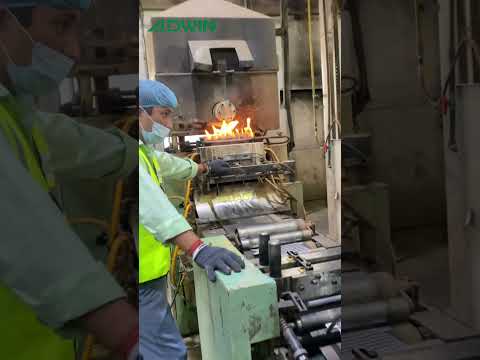
ADWIN Power Manufacturing Plant Tour | Lead Acid Battery Production Facility
Happy Mother's Day from team Adwin #happymothersday #mothersday #shorts
Team Adwin wishes you a very Happy Holi | Happy Holi 2024 #shorts #happyholi
Adwin wishes you a joyous Republic Day celebration | #short #adwin #republicday #battery #shortvideo
Wishing you a very Happy New Year From Adwin Family | #newyear2024 #shorts #bomanirani
Adwin Batteries: Powering Through Power Cuts, Uninterrupted Life Every Day!

Happy New Year 2023 #happynewyear #newyear #newyear2023 #bomanirani #batterymanufacturer
Happy New Year 2020


.jpeg)
.jpeg)


.jpeg)


.jpeg)


