VRLA Battery: Meaning, Types, Uses & Price Guide


A vrla battery (Valve Regulated Lead Acid battery) is a sealed, maintenance-free rechargeable battery where a pressure-relief valve prevents gas from escaping during charging. Unlike flooded lead-acid batteries that need regular topping up with distilled water, VRLA batteries recombine gases internally, making them spill-proof and safe for indoor installation. They last 3 to 6 years depending on usage, cost ₹2,000 to ₹50,000+ depending on capacity, and are used in UPS systems, solar energy storage, telecom towers, data centres, inverters, emergency lighting, and electric vehicles.
If you've searched "what is vrla battery" or wanted to understand how VRLA works before buying one, this guide covers the technology, the two types (AGM and Gel), real-world applications, and what to check before purchasing.
What is vrla battery: the 60-second answer
A VRLA battery is a lead-acid battery sealed with a one-way pressure valve. When the battery charges, it produces hydrogen and oxygen gases. In a flooded battery, these gases escape (requiring water top-up). In a VRLA battery, they recombine back into water inside the sealed case. The valve only opens if pressure exceeds safe limits, as a safety mechanism.
Result: zero maintenance, no water topping, no acid spills, and safe operation in any orientation (upright, sideways, or tilted).
VRLA battery at a glance
Parameter | Details |
|---|---|
Full form | Valve Regulated Lead Acid |
Also called | Sealed Lead Acid (SLA), Maintenance-Free battery |
Types | AGM (Absorbent Glass Mat) and Gel |
Voltage | 2V cells, 6V, 12V monoblocs |
Capacity range | 1 Ah to 5,000 Ah |
Lifespan | 3 to 6 years (design life up to 10 years for premium models) |
Operating temperature | -20°C to 50°C (optimal: 20-25°C) |
Depth of discharge | 50% recommended (deeper discharge shortens life) |
Self-discharge rate | 3% per month at 25°C |
Maintenance | None (sealed, no water topping) |
Price (India) | ₹2,000 to ₹50,000+ depending on Ah and type |
AGM vs Gel VRLA: the two types explained
Parameter | AGM (Absorbent Glass Mat) | Gel |
|---|---|---|
Electrolyte | Liquid absorbed in fibreglass mat | Silica-based gel (solidified) |
Internal resistance | Lower (better for high-drain applications) | Higher (better for slow, deep discharge) |
Charge speed | Faster (accepts higher charge current) | Slower (needs gentle charge profile) |
Best for | UPS, inverters, starting applications, telecom | Solar storage, deep cycle, marine, camping |
Temperature tolerance | Good | Better (gel handles heat better) |
Cost | Lower (₹2,000 to ₹15,000 for 12V) | Higher (₹5,000 to ₹25,000 for 12V) |
Cycle life | 300 to 500 cycles at 50% DoD | 500 to 1,000 cycles at 50% DoD |
Vibration resistance | Better (mat holds electrolyte firmly) | Good |
Overcharge sensitivity | Moderate | High (gel can dry out if overcharged) |
Bottom line: AGM for UPS and inverters where fast recharge matters. Gel for solar and deep-cycle applications where longevity matters more than charge speed. Adwin manufactures both AGM and Gel VRLA batteries at their ISO-certified Yamuna Nagar facility.
What is smf vrla battery?
An smf vrla battery (Sealed Maintenance-Free VRLA battery) is the same technology described above. "SMF" is a commercial label emphasising the maintenance-free aspect. All VRLA batteries are inherently sealed and maintenance-free, so "SMF VRLA" is technically redundant but widely used in Indian markets, especially for UPS and inverter batteries.
When you see "SMF battery" on a product label, it's a VRLA battery. When you see "VRLA battery" in a technical spec, it could be either AGM or Gel. The terms overlap significantly.
Term | Meaning | Difference |
|---|---|---|
VRLA | Valve Regulated Lead Acid (technical term) | Umbrella term covering both AGM and Gel |
SMF | Sealed Maintenance-Free (commercial label) | Same as VRLA, marketing-oriented |
SLA | Sealed Lead Acid | Older term, same technology |
AGM | Absorbent Glass Mat | Specific type of VRLA |
Gel | Gel electrolyte | Specific type of VRLA |
Where VRLA batteries are used in India
Application | Typical capacity | Battery type | Why VRLA |
|---|---|---|---|
Home UPS/inverter | 12V, 7 to 200 Ah | AGM | Maintenance-free, safe indoors |
Solar energy storage | 12V, 20 to 200 Ah | Gel or AGM | Deep cycle capability, handles solar charge profiles |
Telecom towers | 2V, 200 to 5,000 Ah | AGM | Remote locations, no maintenance possible |
Data centres | 12V, 100 to 200 Ah | AGM | Compact, high discharge rate |
Emergency lighting | 6V or 12V, 7 to 20 Ah | AGM | Instant power, compact |
Two-wheeler starting | 12V, 3 to 9 Ah | AGM | Vibration-resistant, sealed |
E-rickshaw traction | 12V, 100 to 150 Ah | AGM or Gel | Deep cycle, daily use |
Adwin's UEST solar battery range and Yodha/Turbo inverter battery range both use VRLA technology optimised for Indian conditions (high temperatures, voltage fluctuations, frequent cycling).
VRLA battery price in India
Capacity | AGM price range | Gel price range | Common use |
|---|---|---|---|
7 Ah (12V) | ₹800 to ₹1,500 | ₹1,200 to ₹2,000 | UPS, emergency lights |
20 Ah (12V) | ₹2,000 to ₹4,000 | ₹3,500 to ₹6,000 | Small solar systems |
65 Ah (12V) | ₹5,000 to ₹8,000 | ₹7,000 to ₹12,000 | Inverters, medium solar |
100 Ah (12V) | ₹8,000 to ₹14,000 | ₹12,000 to ₹20,000 | Solar, e-rickshaw |
150 Ah (12V) | ₹12,000 to ₹20,000 | ₹18,000 to ₹28,000 | Large solar, industrial |
200 Ah (12V) | ₹15,000 to ₹25,000 | ₹22,000 to ₹35,000 | Industrial, large solar |
Prices vary by brand. Adwin's VRLA batteries (manufactured at their 32.5-acre facility producing 75,000+ units monthly) typically fall at the competitive end of these ranges while maintaining ISO 9001:2015 and ISO 14001:2015 quality standards. Check Adwin product range.
How to choose the right VRLA battery
Your need | Choose this | Why |
|---|---|---|
Home UPS/inverter backup during power cuts | AGM VRLA (100 to 150 Ah) | Fast recharge between outages, good cycle life |
Rooftop solar with battery storage | Gel VRLA or tubular (100 to 200 Ah) | Deep cycle capability, handles partial state of charge |
Two-wheeler starting battery | AGM VRLA (3 to 9 Ah) | Vibration-resistant, sealed, compact |
E-rickshaw daily traction | Deep cycle AGM (100 to 150 Ah) | High cycle life for daily charge-discharge |
Telecom tower backup | 2V AGM cells (200+ Ah) | Remote operation, long standby life |
Computer UPS | AGM VRLA (7 to 12 Ah) | Compact, reliable, immediate switchover |
Pros and cons of VRLA batteries
Pros:
- Zero maintenance (no water topping ever)
- Spill-proof (can operate in any orientation)
- Safe for indoor use (no hydrogen gas emission in normal operation)
- Compact and lightweight compared to flooded batteries
- Lower self-discharge rate than flooded batteries
Cons:
- Shorter lifespan than tubular flooded batteries (3 to 6 years vs 5 to 8 years)
- Sensitive to overcharging (especially Gel type)
- Higher cost per Ah compared to flooded batteries
- Cannot be recovered once deep-discharged below 10.5V
- Operating temperature above 40°C significantly reduces lifespan
FAQs
What is a vrla battery?
A vrla battery (Valve Regulated Lead Acid) is a sealed, maintenance-free rechargeable battery. It recombines gases internally instead of venting them, eliminating the need for water topping. Used in UPS, solar, telecom, inverters, and vehicles.
What is vrla battery meaning in simple terms?
VRLA battery meaning is "Valve Regulated Lead Acid." The "valve regulated" part means a small pressure-relief valve controls gas release. In practice, it means the battery is sealed, maintenance-free, and safe for indoor use. The vrla battery means you never need to add water or check acid levels.
What is smf vrla battery?
An smf vrla battery is a Sealed Maintenance-Free VRLA battery. SMF is a commercial label. Technically, all VRLA batteries are sealed and maintenance-free, so "SMF VRLA" and "VRLA" describe the same technology. The term is commonly used in India for UPS and inverter batteries.
How long does a VRLA battery last?
VRLA batteries last 3 to 6 years under normal conditions. Premium models with design life ratings claim up to 10 years, but real-world performance depends on temperature, charge cycling, and depth of discharge. Operating above 40°C can reduce lifespan by 50%.
VRLA vs tubular battery: which is better?
Tubular batteries last longer (5 to 8 years) and handle deep discharges better, but need water topping every 3 to 6 months. VRLA batteries are maintenance-free and compact but have shorter lifespans. For homes with frequent power cuts, tubular is better for longevity. For offices, solar, or UPS where maintenance is impractical, VRLA wins. Adwin manufactures both tubular inverter batteries and VRLA variants.
What is the price of VRLA battery in India?
VRLA battery prices range from ₹800 (7 Ah small UPS) to ₹35,000+ (200 Ah industrial Gel). A typical 100 Ah AGM battery for home inverter costs ₹8,000 to ₹14,000. Prices vary by brand, type (AGM vs Gel), and capacity.
Can VRLA batteries be used for solar?
Yes. Gel VRLA batteries are specifically designed for solar applications. They handle the partial state of charge that solar panels create (cloudy days produce less charge). Adwin's UEST solar battery range is designed for rooftop and off-grid solar systems.
Are VRLA batteries safe for indoor use?
Yes. VRLA batteries emit negligible gas under normal operation. The sealed design prevents acid spills. They are used inside homes, offices, hospitals, and data centres worldwide. Ensure proper ventilation as a precaution, and never overcharge.
Featured Videos
Watch insightful guides and product highlights

Adwin Power Partnership Experience
25 Years of Power: What Makes Adwin Two-Wheeler Batteries Reliable

Real experiences. Real words. Real relationships.
What Makes Adwin Power Partnerships Last? | A Partner’s Real Experience
Adwin Power Partnership Experience | Real Story, Real Trust, Real Growth

Reduce Generator Dependency with Lithium Battery Energy Storage | Adwin Power
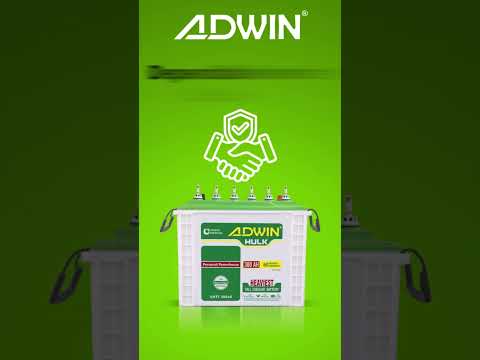
Connect with us and get a reliable power source for your home with Adwin.

Choose Adwin and Be Bright!
Long Backup Batteries | Adwin Batteries
Build a greener tomorrow by choosing solar power

Say goodbye to interruptions and embrace uninterrupted memories!

Let your lives be uninterrupted with Adwin!
Adwin Car Battery | Best Automotive battery for cars | #adwin #battery #shorts #carbattery #carshort

Adwin Inverter batteries! Order Now and know the difference! #shorts
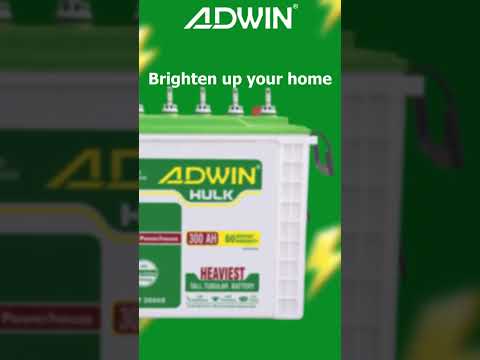
Trust the backup of Adwin #inverterbatteries to keep your home bright #Adwin #adwinbatteries
Employee Engagement at ADWIN Batteries | Life at ADWIN
बढ़ते बिजली बिल से परेशान? Solar Panel से करें Bill कम | Adwin Power Solar Solution

Adwin Power Meet 2026
Tired of sudden power cuts disrupting your daily life?

Welcome to ADWIN | Employee Induction Program Highlights

Ever wondered what goes behind the making of a reliable battery?

Big Match Tonight? Zero Power Cuts Allowed! ⚽🔋 | Adwin Bheem Inverter Battery

Safety Engineering Training Program at ADWIN
Adwin Solar Batteries | Top-notch solar batteries for maximizing savings
Adwin Inverter Battery | Best Inverter Battery #battery #inverterbattery #Shorts #india
Adwin inverter batteries | Best battery for long lasting performance | Adwin Customer Testimonial
Adwin Batteries: Powering Through Power Cuts, Uninterrupted Life Every Day!

Tap into the sun’s power, boost your savings, & enjoy uninterrupted workflow with Solar Battery.
Adwin Battery at EV EXPO, New Delhi



.jpeg)
.jpeg)


.jpeg)


.jpeg)


